Practice Like A Pro 11.0
Most seasons are now over.
Some coaches are already planning for next season. Some are finally relaxing a little. And some are still replaying that one missed coverage from January in their head while mowing the lawn.
This time of year is important. Take a break, recharge, spend time away from the rink, and come back fresh. Hockey will still be there in a few weeks. Probably with another coach explaining why “we just need to win more battles.”
But if you’re already starting to think about next season’s practices, here are five simple but effective drills you can bring into your program. Nothing overly complicated. Nothing that needs a 15-minute explanation at the whiteboard.
Just good drills that create touches, reads, transitions, and compete.

Each drill below has a video attached - click on the drill graphic to see the video!
Practice Like A Pro 11.0 – PSD – Transition In Zone
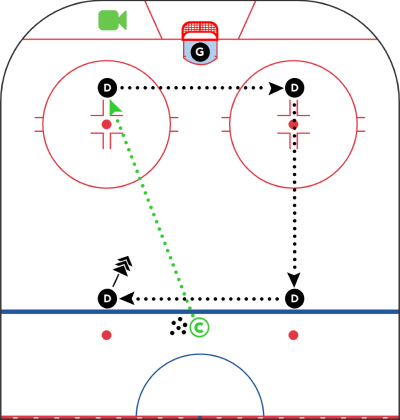
You’ve probably seen this drill a hundred times.
At first glance, it might look simple. No fancy setup, no TikTok-style passing sequence, no five pucks flying at once.
But this drill works because it focuses on one thing that separates good players from great players: execution.
The defensemen are constantly moving, transitioning, gapping up, supporting, and opening up for the next pass. Once the puck goes low to high, the D on the blue line must move laterally, get their eyes up ice, and move the puck quickly.
One important detail: minimize unnecessary stickhandling. The puck almost always moves faster than the player… unless you coach Connor McDavid, and even then it’s close.
This is a great drill to revisit every few weeks, especially with defensemen. During busy stretches of the season, when practice time disappears faster than practice jerseys after laundry day, simple execution-based drills like this can make a big difference.
Practice Like A Pro 11.0 – PSF – Attacking 1 vs 1
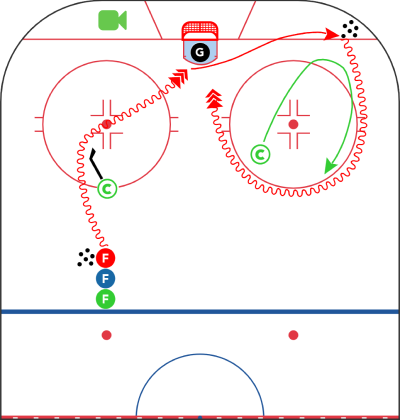
Can you work on skills, attacking, and game situations with only one forward?
Absolutely.
Sometimes we overcomplicate skill work. Before you know it, players are doing 17 tight turns around cones and nobody remembers what part was supposed to help in a game.
This drill keeps it realistic.
The forward attacks the net twice during the same rep:
- First on a line rush
- Then off a puck retrieval in the corner
As a coach, you control how much pressure you apply. You can start lighter or turn it into full survival mode depending on the day.
The key teaching points are scanning the ice, attacking downhill with speed, and finding a way to bring the puck to dangerous areas.
Because in games, nobody says: “Take your time, buddy.”
Practice Like A Pro 11.0 – SAG – 3 vs 2 Behind the Net
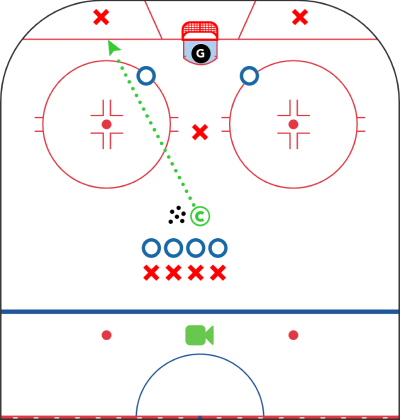
This drill might take a few reps before everyone fully understands the rotation.
And yes, there will probably be one player standing there completely confused during the first whistle. That’s normal.
The setup is simple:
- Two offensive players below the goal line
- One player around the hashmarks
- Two defenders
Once the play ends, whether it’s a goal, save, missed shot, or rim out, the offensive group is done. The two defenders immediately become the new offensive players behind the net while three new players jump in:
- One joins offensively
- Two become the new defenders
This creates quick transitions, confusion, counterattacks, and a lot of chaos in a very small area. Which honestly sounds a lot like hockey.
Coaches need to stay ready on the whistle, but players also need to react quickly and communicate during the switch.
And if your players look confused for the first five minutes, congratulations. You’ve created a realistic hockey environment.
Practice Like A Pro 11.0 – Shooting Activation
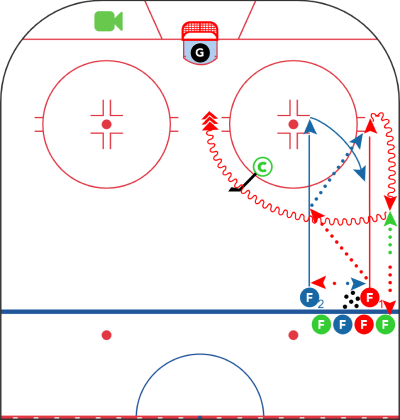
Nothing gets players going faster than a drill with a lot of puck touches.
This drill works great early in practice because players are constantly moving, handling pucks, and attacking under pressure.
You can easily adjust the difficulty depending on the pressure from the coach or token defender. If it’s the first drill of practice, keep it lighter. If the players are already warm, turn up the pressure and make them work.
Handling pucks in tight areas with someone breathing down your neck forces players to move their feet and protect the puck properly.
Funny how everyone starts skating harder once pressure shows up.
This is a great drill for activation, puck touches, and getting forwards engaged early in practice.
Practice Like A Pro 11.0 – Skills In Small Area
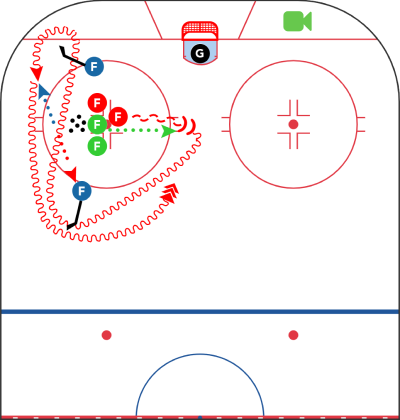
This drill is similar to the previous one but adds more skating, agility, and deception in tight spaces.
The player tries to attack the middle from two different spots but can’t get inside.
Now what?
Instead of forcing a bad play, they move higher in the zone, use the defenseman for a give-and-go, and then attack the middle again.
It’s a lot of quick weight shifts, edge work, puck control, and decision-making in a short amount of time. Most importantly, it forces players to get uncomfortable.
And usually, the best development happens right outside the comfort zone… right beside the area where players try toe drags that definitely should not have been attempted.
Simple Drills Still Work
The best drills are not always the fanciest ones.
Most of the time, the drills players improve the most from are the ones that create quick decisions, puck touches, pressure, and realistic situations.
As coaches, we sometimes try to reinvent hockey every summer. Meanwhile, players usually just need better habits, better execution, and more compete.
Keep practices simple, competitive, and fun.
And if the players leave the ice tired, engaged, and smiling a little bit, you probably had a pretty good practice.
Now enjoy the offseason… at least until someone sends you a video saying:
“Hey coach, what do you think of this drill?”
About Mitch Giguere
Mitch Giguere is a professional hockey coach and lifelong student of the game. He is currently an assistant coach with the Wheeling Nailers, an ECHL affiliate of the Pittsburgh Penguins (NHL) and Wilkes-Barre/Scranton Penguins (AHL). A former KHL coach, Mitch holds both his High Performance 2 certification from Hockey Canada and an Advanced Coaching Diploma (NCCP4) through the Canadian Sport Institute.
As a CoachThem Teammate, Mitch contributes monthly blogs focused on skill-specific drills, practice efficiency, and modern coaching habits. His goal is simple: help coaches design smarter practices, stay organized throughout the season, and create environments where players can develop with intention.
Frequently Asked Questions
What are these drills designed to improve?
They focus on the details that drive breakout success: handling rims, scanning pressure, supporting teammates, and moving the puck quickly under forecheck pressure.
How do I keep the Passing Activation drill fresh?
Add simple constraints like no passing back to the same player, forehand-only/backhand-only, or no passes on the same side. Let players choose the rules to increase competitiveness.
Why practice handling hard rims so often?
Rims look easy without pressure, but real forechecking makes them hard. Reps build confidence in retrievals, body positioning, and quick decision-making that shows up in games.
Do these drills work for both forwards and defensemen?
Yes. Several drills involve everyone, while others target specific roles (for example, Net Shield and Rims and Blue Line emphasize defensemen handling pressure and activating quickly).
How do I add pressure without wrecking the drill?
Start with light pressure so timing, support, and puck control are clean. Then gradually add speed and contact as players get comfortable, keeping the drill competitive but under control.

Now available on iOS — access your saved practice plans on the go.
Build Better Practices — Faster
Trusted by NHL, PWHL, and youth coaches across the world.
Start Your 10-Day Free TrialAlready have an account? Log in
Know other coaches who’d love CoachThem?
Join CoachThem Rewards and earn commissions for every referral.
Written by the CoachThem Team, May 28 2026
Recommended Posts
How Bethel University Men’s Hockey Uses CoachThem Every Day
See how Bethel University Men’s Hockey uses CoachThem for pre-season planning, daily practices, special teams, staff collaboration, and a seven-year coaching archive.
Mike Weaver Joins the Puck Nation Podcast to Talk Hockey, His NHL Career & More
CoachThem Co-Founder and CEO Mike Weaver joins the Puck Nation Podcast to discuss his 13-year NHL career, hockey journey, locker room stories, and life on and off the ice.
Practice Like A Pro 12.0
Simple, competitive hockey drills from Mitch Giguere designed to improve communication, puck protection, defensive habits, line changes, and game-like decision-making.