Practice Like A Pro 13.0
Mitch Giguere is back with another edition of Practice Like A Pro. As a regular CoachThem contributor, Mitch shares skill-specific drills, coaching details, and practical ways to bring pro-level concepts into everyday practices. In Practice Like A Pro 13.0, the focus shifts to one of the most common — and often overlooked — situations in hockey: picking up rimmed pucks and making the next play under pressure.
If you watched any NHL Development Camp this summer, you probably noticed one thing.
Rims.
Everywhere you looked, coaches were working on picking up rimmed pucks, escaping the wall, and making plays under pressure.
And honestly, it makes sense.
How many possessions are won or lost because a winger can't handle a rim? How many breakouts die because players get stuck on the wall instead of creating space?
Not many coaches spend an entire practice working on rims, but maybe we should.
This month is dedicated to one of the most overlooked skills in hockey. These drills are simple, build off one another, and can easily become an entire practice focused on winning wall battles and making better plays off rimmed pucks.

Each drill below has a video attached - click on the drill graphic to see the video!
Practice Like A Pro 13.0 – Pick Up Rim Activation
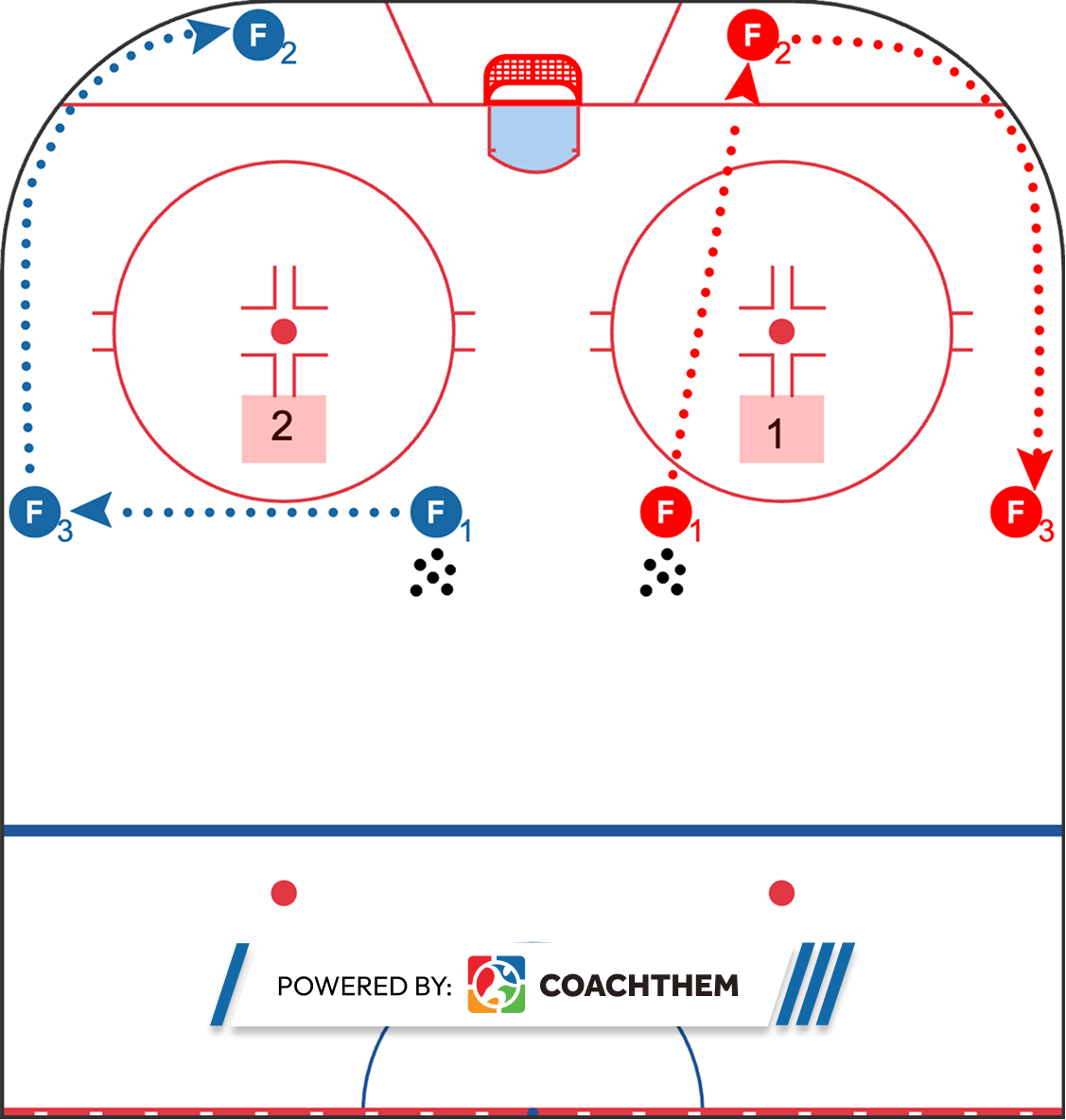
If you have five to seven minutes of free ice before practice starts, this is a perfect way to get your forwards moving.
It's nothing fancy, and honestly, you probably don't even need the video to understand it.
The objective is simple: develop good habits while picking up rimmed pucks.
Players work on timing, body positioning, and arriving at the puck with speed instead of waiting for it.
Sometimes the simplest warm-up drills become the ones that pay off the most in games.
Besides, it's a much better way to start practice than watching players casually shoot pucks from the blue line.
Practice Like A Pro 13.0 – Dual Pick Up Rims
Now we add another layer.
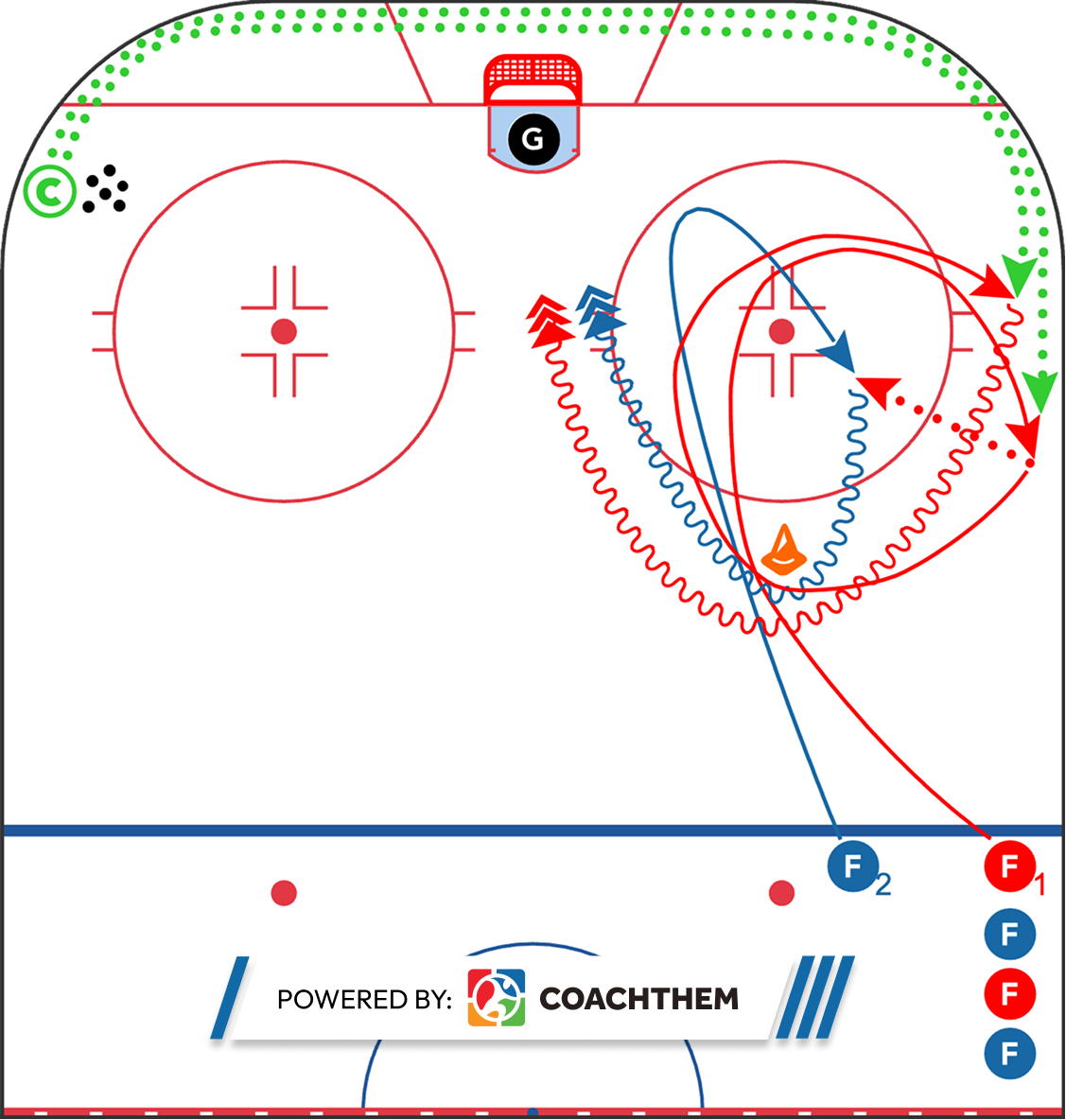
Maintaining the proper skating route is important because we're trying to recreate a realistic game situation.
The first pickup matters.
The second one matters even more.
Players must recover the first rim, then quickly get back into position to attack the second one from the correct angle.
This is also a great opportunity to add a supporting forward underneath the puck.
Now the player on the wall has to scan the ice, identify support, and make a decision instead of automatically throwing the puck up the boards.
Just because the wall is there doesn't mean that's where the puck has to go.
Practice Like A Pro 13.0 – Net Release for Rim
Why run a long drill when a shorter one gives you twice as many repetitions?
This drill focuses on the little details.
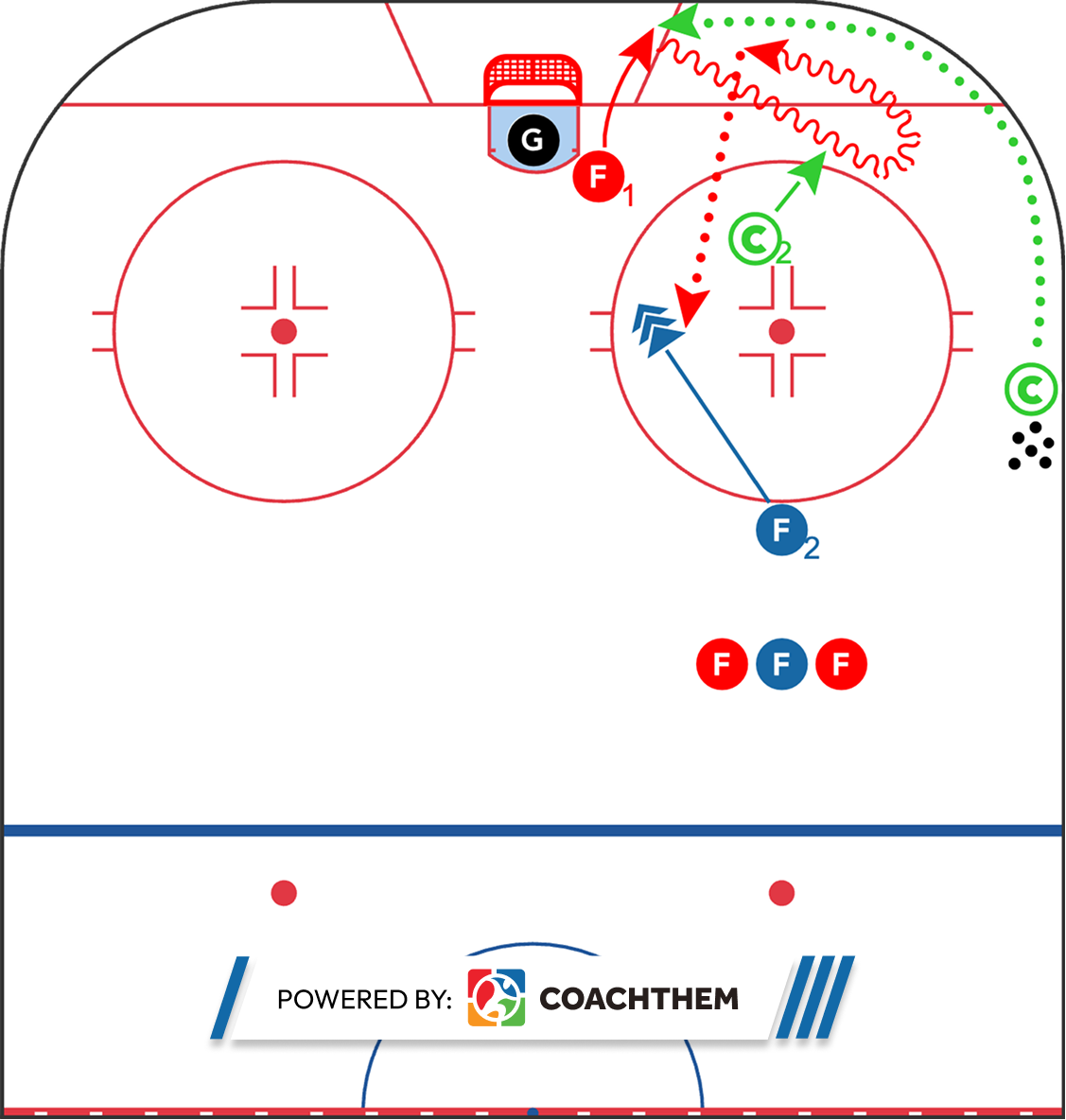
The forward picks up the rim, uses the net as protection, scans the ice, and looks for F2 opening up in the slot.
Adding a coach with an active stick between the two players forces the puck carrier to find another passing lane instead of making the obvious play.
Small drill.
Lots of touches.
Lots of teaching.
Sometimes less really is more.
Practice Like A Pro 13.0 – Pick Up Retrievals to OZP
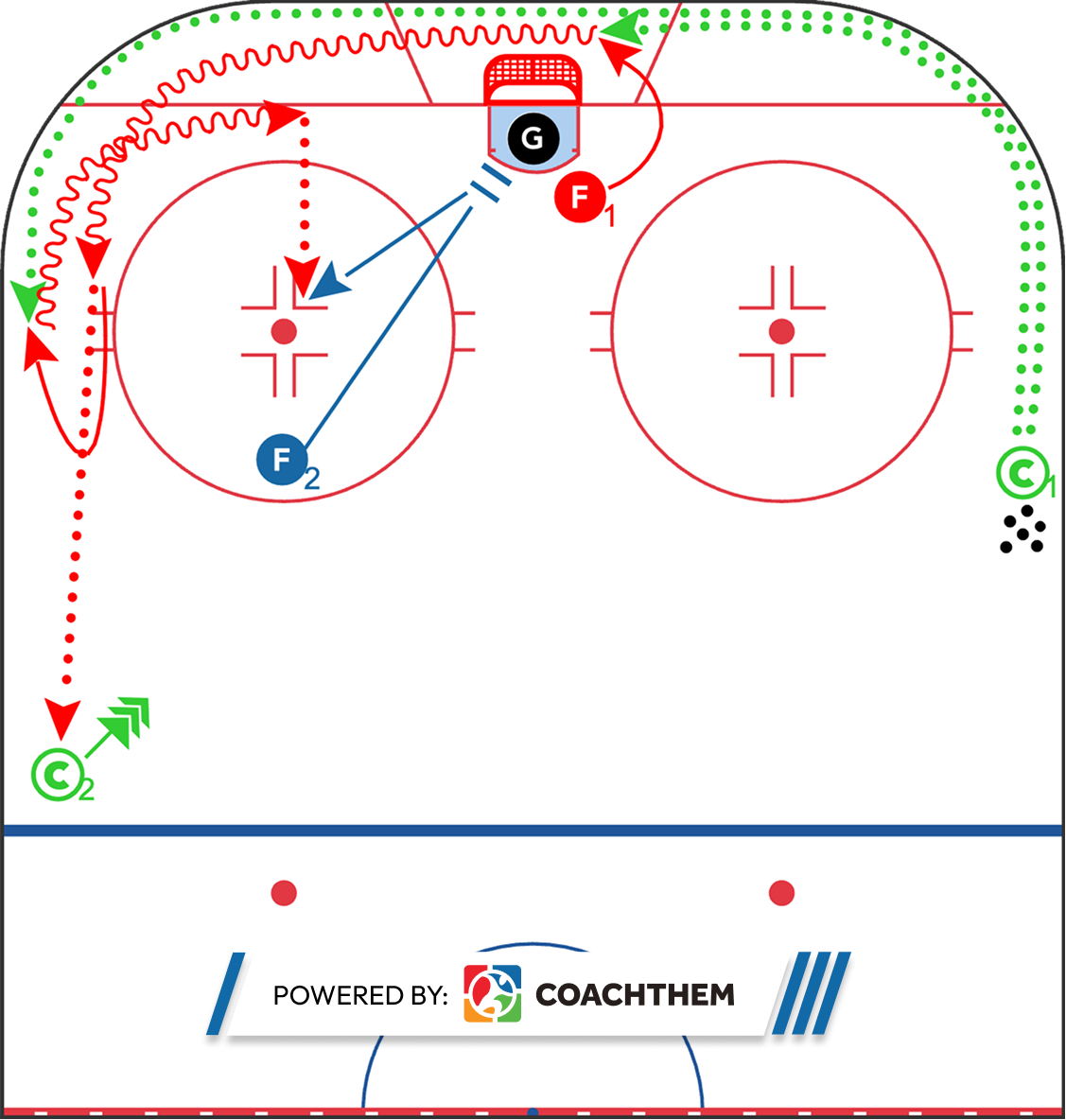
This drill builds directly off the previous one.
The defenseman (or forward, depending on how you set it up) uses the back of the net as a shield before making a low-to-high play.
Instead of resetting all the way back to the original position, the forward stays on the same side and immediately works on another rim.
This keeps the drill moving, increases repetitions, and exposes players to multiple game situations in a short amount of time.
The fewer laps around the rink... the more hockey gets played.
Practice Like A Pro 13.0 – Rim to Attack
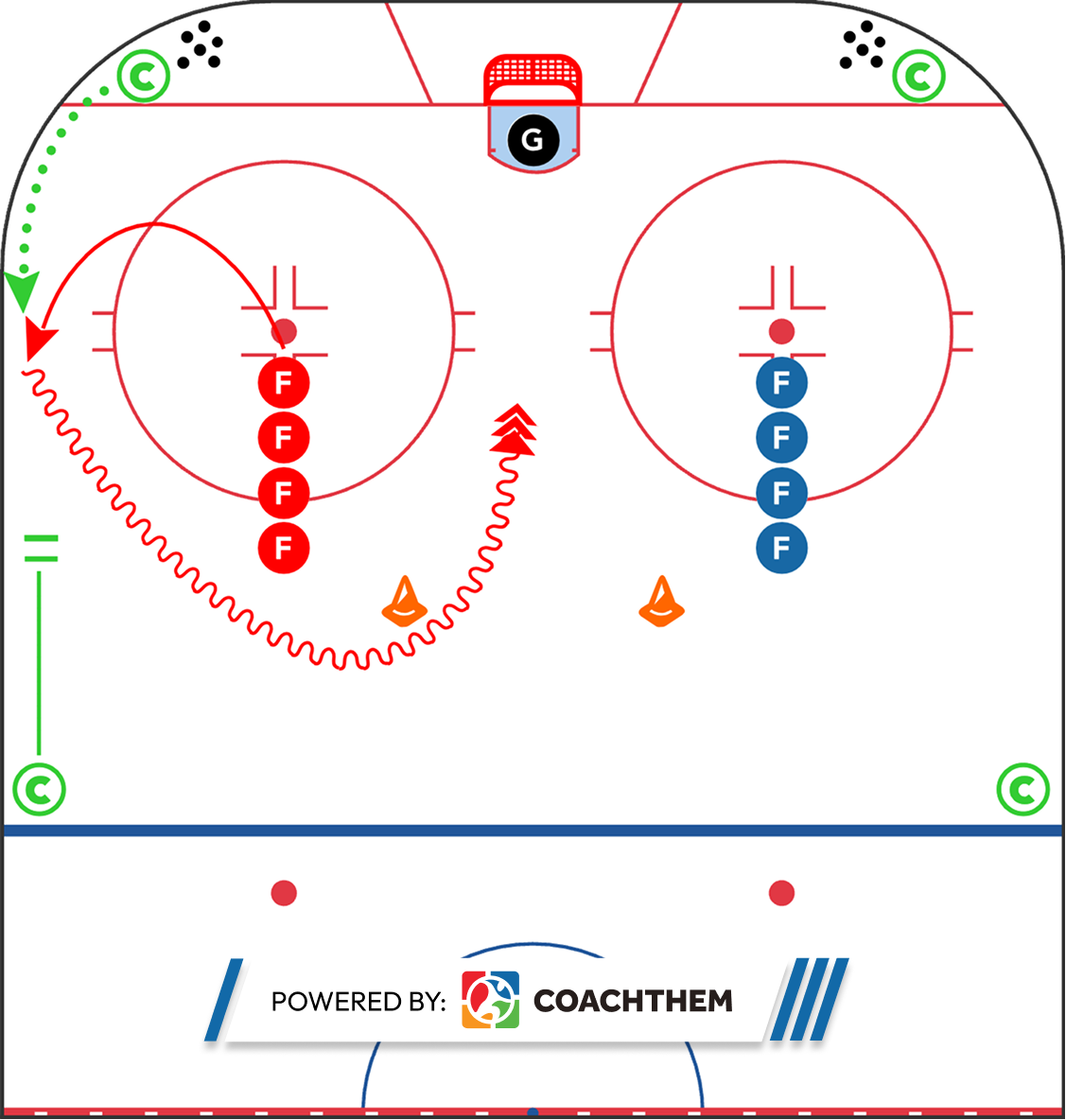
Now it's time to add pressure.
This progression simulates retrieving a rimmed puck while facing pressure from the forechecking winger sealing the wall.
The objective is to get off the boards quickly, create separation, and attack the middle of the ice.
Because if you stay glued to the wall, you're usually helping the forechecker more than you're helping yourself.
Teaching players how to escape pressure instead of absorbing it is one of the biggest details that separates good breakouts from great ones.
Practice Like A Pro 13.0 – SAG on Rims
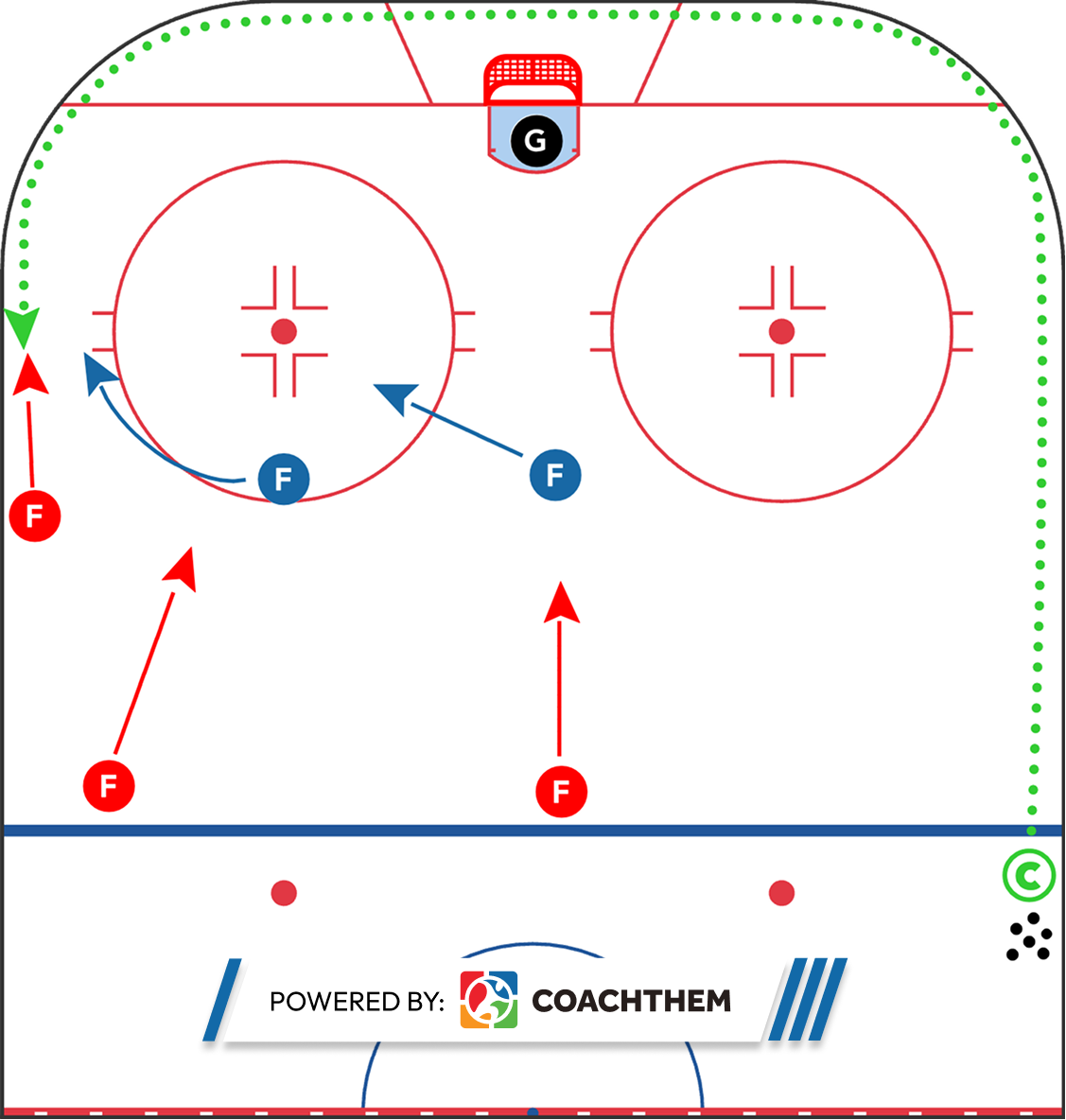
This is where everything comes together.
The video is missing a few players, but don't let that distract you from the concept.
The drill starts with a rimmed puck before transitioning into an odd-man offensive situation.
Meanwhile, the next group is already waiting on the blue line, ready to jump into the following repetition.
If you've spent the previous 45 to 60 minutes teaching players how to retrieve rims, escape pressure, and make better decisions, this is the perfect way to finish practice.
Players immediately get to apply everything they've just learned in a competitive environment.
And isn't that the whole point of practice?
Conclusion
One thing I've learned over the years is that players don't magically get better at wall play just because we tell them to "win battles."
They improve because we give them repetitions.
Lots of them.
The wall isn't a place to get trapped. It's a place to create offense, escape pressure, and start the next play.
The more comfortable your players become handling rims and making decisions under pressure, the more confident they'll be when those same situations show up on Friday night.
So don't be afraid to spend a full practice on what looks like a small detail.
Because in hockey, the little details usually end up making the biggest difference.
And if your wingers stop treating every rim like it's a live grenade... you'll know the practice worked.
About Mitch Giguere
Mitch Giguere is a father of four children and a hockey enthusiast. He is currently the Director of Hockey Operations and Head Coach for the Greensboro Gargoyles in the ECHL, affiliate of the Carolina Hurricanes (NHL) and Chicago Wolves (AHL). In addition, Mitch is a former KHL coach and has obtained his High Performance 2 certification from Hockey Canada.
Mitch also has an Advanced Coaching Diploma (NCCP4) and the Learning Accelerator Certificate received through the Canadian Sports Institute. As a CoachThem Teammate, Mitch contributes monthly blogs focused on skill-specific drills, practice efficiency, and modern coaching habits.
Frequently Asked Questions
Why should hockey players practice picking up rimmed pucks?
Picking up rims is a common game situation that can directly impact breakouts, possession, and a team’s ability to escape pressure along the boards. Repeated practice helps players improve timing, body positioning, puck control, and decision-making under pressure.
What skills do rim retrieval drills develop?
Rim retrieval drills help players work on arriving at the puck with speed, using proper skating routes, scanning for support, protecting the puck, creating separation from pressure, and making effective plays off the wall.
Can these rim drills be used as a full hockey practice?
Yes. The drills build progressively from simple rim pickups to pressure situations and small-area games, making it easy to structure an entire practice around wall play, puck retrievals, and decision-making.
How can coaches make rim retrieval drills more game-like?
Coaches can add supporting forwards, active sticks, forechecking pressure, passing options, and competitive small-area situations. These elements force players to scan the ice and make decisions instead of automatically moving the puck up the boards.

Now available on iOS — access your saved practice plans on the go.
Build Better Practices — Faster
Trusted by NHL, PWHL, and youth coaches across the world.
Start Your 10-Day Free TrialAlready have an account? Log in
Know other coaches who’d love CoachThem?
Join CoachThem Rewards and earn commissions for every referral.
Written by the CoachThem Team, July 30 2026
Recommended Posts
Practice Like A Pro 13.0
Improve rim retrievals, wall play, and breakout decisions with Mitch Giguere’s Practice Like A Pro 13.0 hockey drills focused on handling rimmed pucks under pressure.
How Bethel University Men’s Hockey Uses CoachThem Every Day
See how Bethel University Men’s Hockey uses CoachThem for pre-season planning, daily practices, special teams, staff collaboration, and a seven-year coaching archive.
Mike Weaver Joins the Puck Nation Podcast to Talk Hockey, His NHL Career & More
CoachThem Co-Founder and CEO Mike Weaver joins the Puck Nation Podcast to discuss his 13-year NHL career, hockey journey, locker room stories, and life on and off the ice.