Practice Like A Pro 9.0
We’re already in March. The sun is starting to show up again, some teams are already planning their golf schedule, and others are getting ready for playoff hockey. As for us, we’re entering the last stretch of the regular season with less than 15 games left before the playoffs. That means practices need to stay sharp, competitive, and as close to game situations as possible.
This month I picked five drills that I really enjoy using with my teams. Some work on breakouts, some on defensemen activation, and of course we have a couple of small area games because… let’s be honest… players love competing more than skating circles. Let’s jump into it.

Each drill below has a video attached - click on the drill graphic to see the video!
Practice Like A Pro 9.0 – PSD – Breakout and D Activation
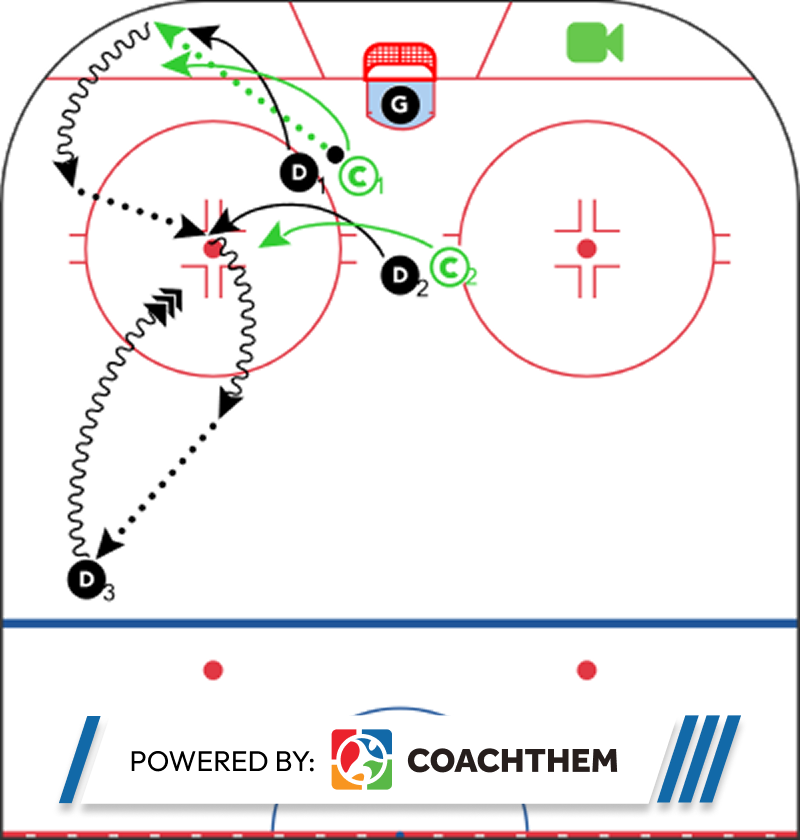
Can you work on two concepts in the same drill? Of course you can. The best hockey practice drills are designed to maximize efficiency while developing multiple skills at once. Coaches love efficiency almost as much as they love fresh ice.
This drill combines a breakout with an offensive zone defenseman activation. It’s a great example of breakout hockey drills that force players to read pressure and make quick decisions.
The drill starts with a breakout under light pressure from a coach. The goal is to exit through the middle of the ice. Depending on the pressure, the defenseman can read the situation and switch the breakout option. After the breakout pass, the second player moves the puck to the defenseman at the offensive blue line and applies pressure (or as we like to call it, surfing the D). The defenseman must read the pressure, beat it, and get to the net for a shot. You can easily add variations to this drill. Change the type of pressure during the breakout to force the defensemen to find different solutions. The coach applying pressure at the blue line can also change his route so the defenseman has to read whether the pressure is coming inside or outside. If you want to make it even more interesting, add a second defenseman (D2). Suddenly your breakout has another option and your blue line becomes a lot more dangerous.
More options usually means better decisions… or at least fewer excuses.
Practice Like A Pro 9.0 – PSD – Blue Line Activation
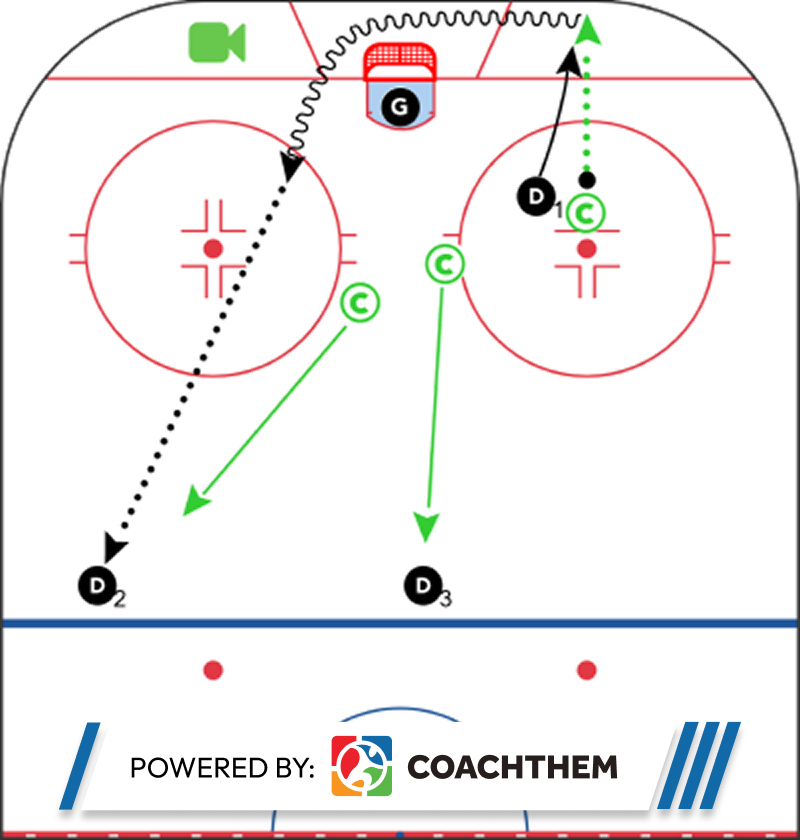
This drill works on breakouts from a different angle while also activating two defensemen at the offensive blue line. It’s also a good way to teach something I like to call CPOA – Change the Point of Attack. You can even use it as a progression from the previous drill. These types of hockey decision making drills help players process pressure and react in real time.
The breakout begins under pressure, with the player using the net as a shield to protect the puck. A coach applying pressure through the middle forces the defenseman to keep his head up and make a good play. Once the puck moves up the ice, those same coaches who were applying pressure suddenly become very interested in your defensemen at the blue line. Now the D must find a solution. Shoot it, skate it, move it. Just don’t freeze like someone just yelled “video review”. One important detail: after making the first pass, D1 must keep moving to change the point of attack and create more offensive layers.
Standing still at the blue line usually leads to one thing: a blocked shot and a coach yelling from the bench.
Practice Like A Pro 9.0 – SAG – 2 vs 2
If you spend five minutes on hockey social media, you’ve probably seen this drill.
And yes… it’s been around forever.
But sometimes the old drills stick around because they actually work.
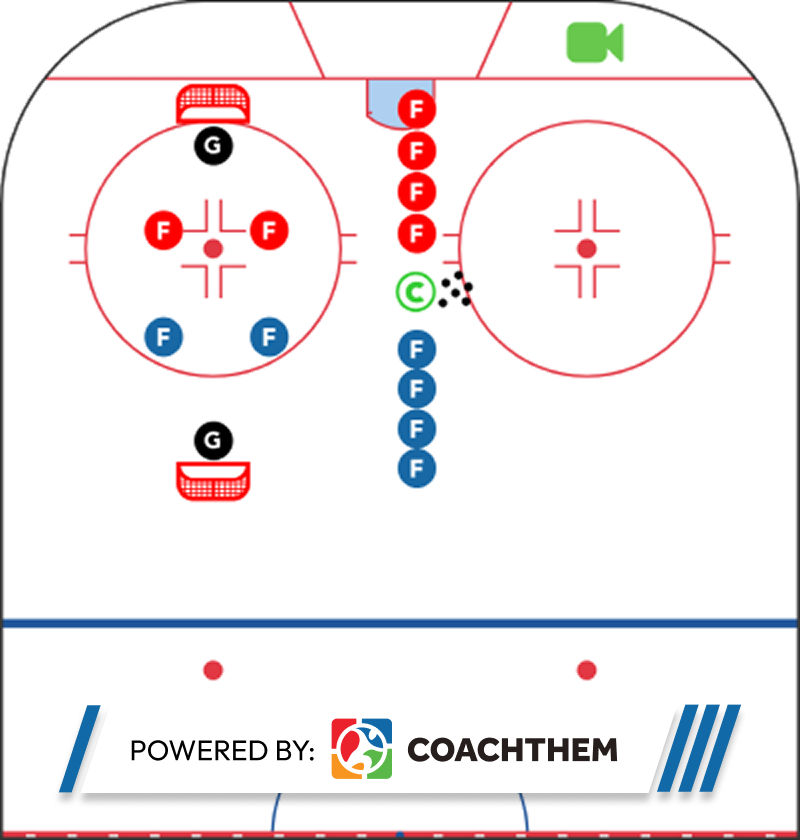
At first glance, this looks like a typical 2 vs 2 small area game where players can also play the puck behind the net. Nothing crazy. This is one of the most effective small area games hockey coaches can use to increase compete and scoring habits.
But here’s the restriction: goals only count off rebounds.
Suddenly players start shooting with purpose instead of trying to pick corners like they’re in the NHL All-Star skills competition.
This forces players to create second opportunities: rebounds, deflections, and tap-ins.
Allowing the puck to be played behind the net also adds another layer to the game. Players can protect the puck, make quick passes, and create plays in tight spaces.
Plus, anytime you tell players there’s a scoring rule, the compete level usually goes up immediately.
Practice Like A Pro 9.0 – PSF – Finding F3
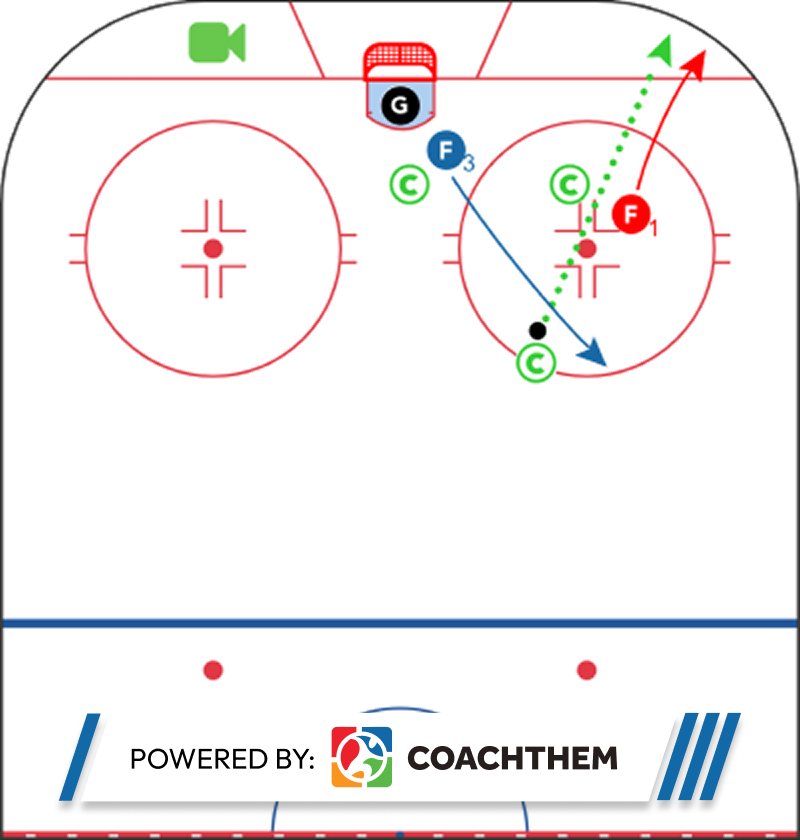
This drill requires several coaches, but if you’re short on staff you can always use players as token pressure.
The focus here is on puck retrievals and support under pressure, which is a huge part of today’s game. These types of hockey decision making drills are essential for developing awareness and timing.
One player retrieves the puck while being pressured by a coach. The second player must find a way to open up as a support option.
The release could be in several spots: high slot, top of the circle, or another open lane.
Both players must make reads because each of them is being covered by a coach.
You can start by asking the F3 to be in a specific location. Once the players understand the concept, increase the pressure and force them to make faster decisions.
The same idea applies to the player retrieving the puck. If the pressure increases, the solution has to come quicker.
And as every coach knows, players suddenly find solutions much faster when someone is chasing them.
Practice Like A Pro 9.0 – SAG – Keep It Away
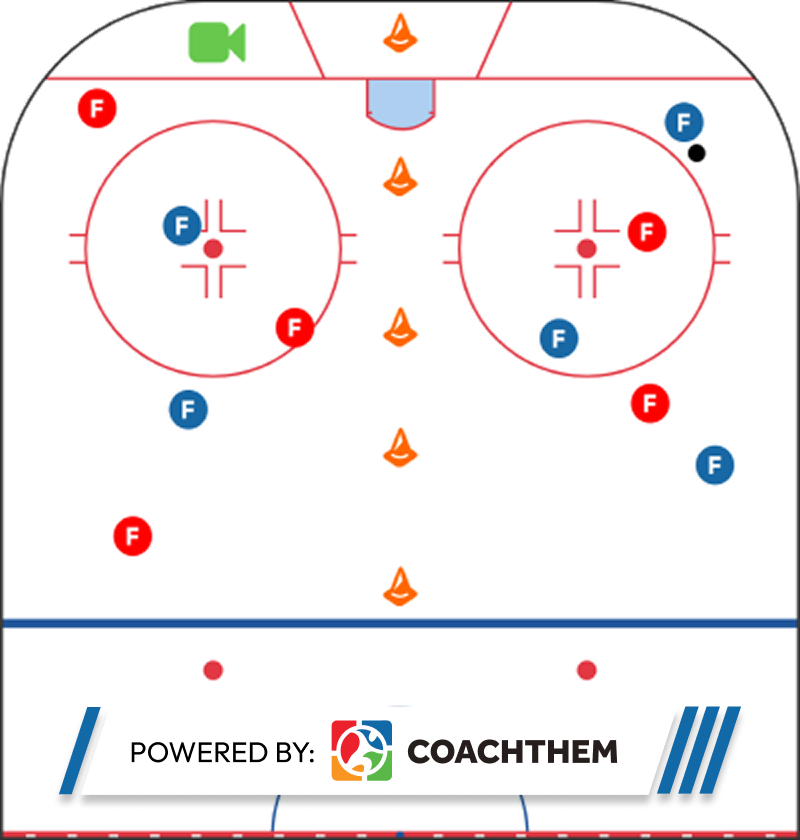
This is a great warm-up drill, especially if your goalie coach wants a few minutes alone with the goalies at the start of practice.
Play 3 vs 2 on each half of the zone. This is another example of small area games hockey coaches can use to build possession skills and awareness.
The offensive team tries to maintain possession while the defensive team tries to steal the puck and pass it to the other side.
The fun part is how you count the points.
For example:
- 1 point for every X seconds of possession
- 1 point for every completed pass
- 2 points for the defensive team if they steal the puck and make a tape-to-tape pass to the other side
You can adjust the scoring however you want depending on what you want to emphasize.
And let’s be honest… once players know there’s a score, suddenly everyone competes a little harder. Funny how that works.
As the regular season winds down and playoffs get closer, practices become even more important. Players already know the systems, so this is a great time to focus on decision-making, puck support, and playing under pressure. The best hockey practice drills during this time focus on quick thinking and execution.
If your drills force players to think, compete, and touch the puck often, you’re probably doing something right.
And if your players are having fun while doing it… that’s even better.
Good luck with the final stretch of the season, and enjoy the playoff push.
About Mitch Giguere
Mitch Giguere is a professional hockey coach and lifelong student of the game. He is currently an assistant coach with the Wheeling Nailers, an ECHL affiliate of the Pittsburgh Penguins (NHL) and Wilkes-Barre/Scranton Penguins (AHL). A former KHL coach, Mitch holds both his High Performance 2 certification from Hockey Canada and an Advanced Coaching Diploma (NCCP4) through the Canadian Sport Institute.
As a CoachThem Teammate, Mitch contributes monthly blogs focused on skill-specific drills, practice efficiency, and modern coaching habits. His goal is simple: help coaches design smarter practices, stay organized throughout the season, and create environments where players can develop with intention.
Frequently Asked Questions
What should hockey coaches focus on in practice near the end of the regular season?
Near the end of the regular season, hockey coaches should focus on keeping practices sharp, competitive, and as close to game situations as possible. This is a great time to emphasize decision-making, puck support, breakouts, defensive activation, and playing under pressure before the playoffs begin.
Why are small area games effective in hockey practice?
Small area games are effective because they increase competition, force quick decisions, and create more puck touches in tight spaces. They also make practice more engaging for players, especially when coaches add scoring rules that reward specific habits like rebounds, deflections, puck protection, or possession.
How can coaches make breakout drills more realistic?
Coaches can make breakout drills more realistic by adding light pressure, changing the route of the forecheck, and giving defensemen multiple breakout options to read. This helps players keep their heads up, react to pressure, and find better solutions instead of repeating the same breakout pattern every time.
What makes a good playoff preparation drill in hockey?
A good playoff preparation drill forces players to think, compete, support one another, and execute under pressure. The best drills often combine game-like reads with high engagement, helping players build habits that translate directly into meaningful late-season and playoff situations.

Now available on iOS — access your saved practice plans on the go.
Build Better Practices — Faster
Trusted by NHL, PWHL, and youth coaches across the world.
Start Your 10-Day Free TrialAlready have an account? Log in
Know other coaches who’d love CoachThem?
Join CoachThem Rewards and earn commissions for every referral.
Written by the CoachThem Team, March 31 2026
Recommended Posts
Practice Like A Pro 9.0
Hockey practice drills focused on breakouts, blue line activation, and small area games. Help your players improve decision-making, puck support, and compete level in every practice.
The Playoff Strength Plan Every Ice Hockey Coach Needs
Playoff hockey demands a different approach to strength and performance. Learn how to structure training, manage fatigue, and maintain speed, power, and efficiency when it matters most.
Nick Turcotte’s Stickhandling Drills for Better Puck Control and Peripheral Vision
Learn head-up stickhandling drills from Nick Turcotte designed to improve peripheral vision, puck control, and on-ice awareness. These hockey skill drills help players develop feel for the puck while keeping their head up and reading the play.