Practice Like A Pro 12.0
As coaches, we all do it.
We spend 30 minutes searching for the next great drill, save six videos, screenshot three diagrams, and convince ourselves that this one drill from a U18 team in Finland is about to solve all our problems. Then we run a simple 2-on-1, and it ends up being the best drill of the week. Sometimes the best drills aren't the most complicated ones. They're the ones that force players to compete, communicate, make reads, and execute under pressure.
This month's drills are exactly that. Nothing overly fancy. No 14-pass sequence that requires a pilot's license to explain. Just simple concepts that develop habits players will actually use in games.
Let's get into it.

Each drill below has a video attached - click on the drill graphic to see the video!
Practice Like A Pro 12.0 – Passing Drill with Two Pucks
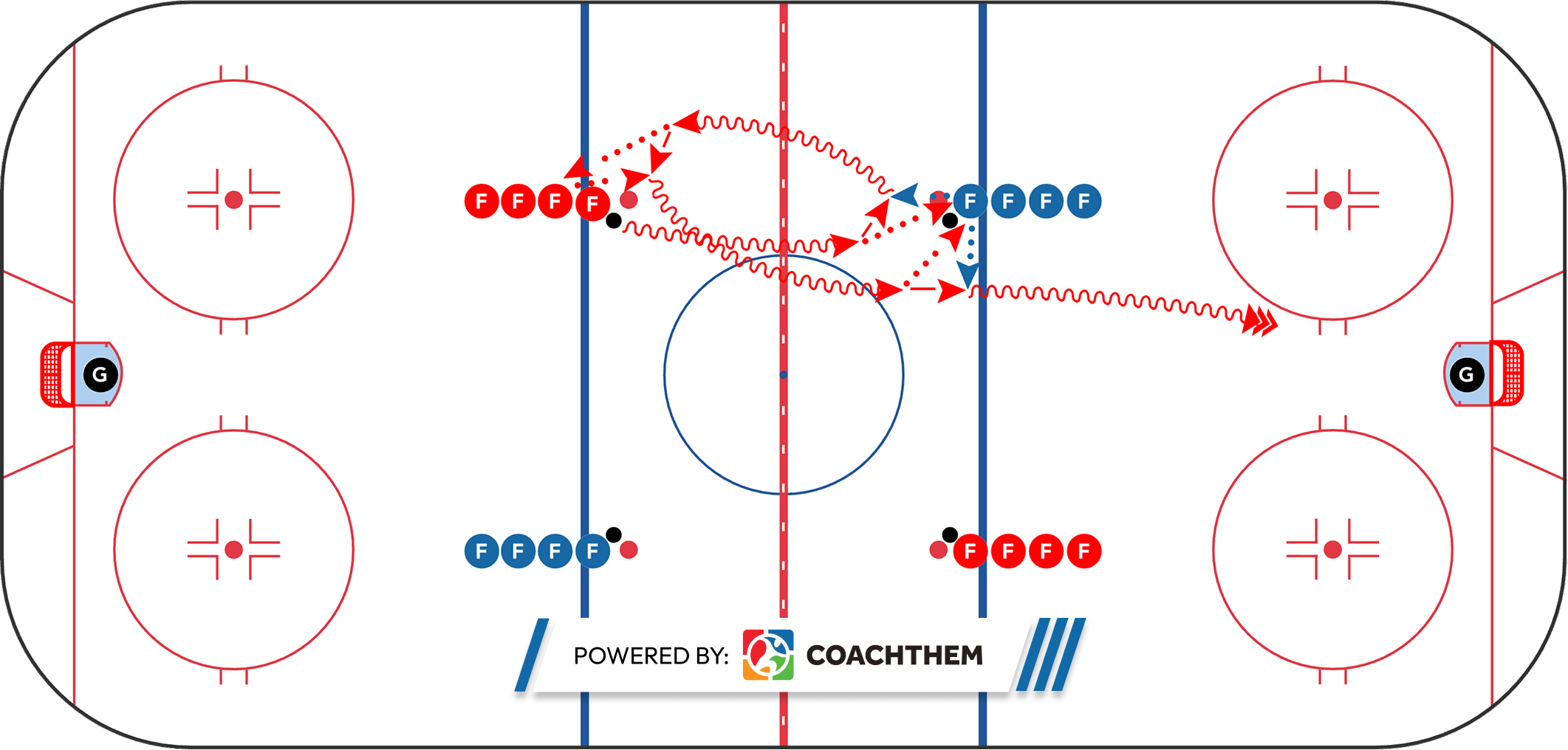
This is a great activation drill to start practice. The concept is simple: players are passing one puck while receiving another at the same time. It immediately forces them to work on hand-eye coordination, awareness, and communication. The pace is a little slower than a traditional "Wakey Wakey" drill, but that's not a bad thing. The objective isn't speed for the sake of speed. It's making players process information and find solutions. How do they communicate? Maybe they talk. Maybe they point. Maybe they read body language.
Of course, we all know what's coming if you don't encourage communication: complete silence followed by two pucks ending up in the same place. This drill naturally forces players to communicate and stay engaged from start to finish.
Practice Like A Pro 12.0 – 3v2 Straight
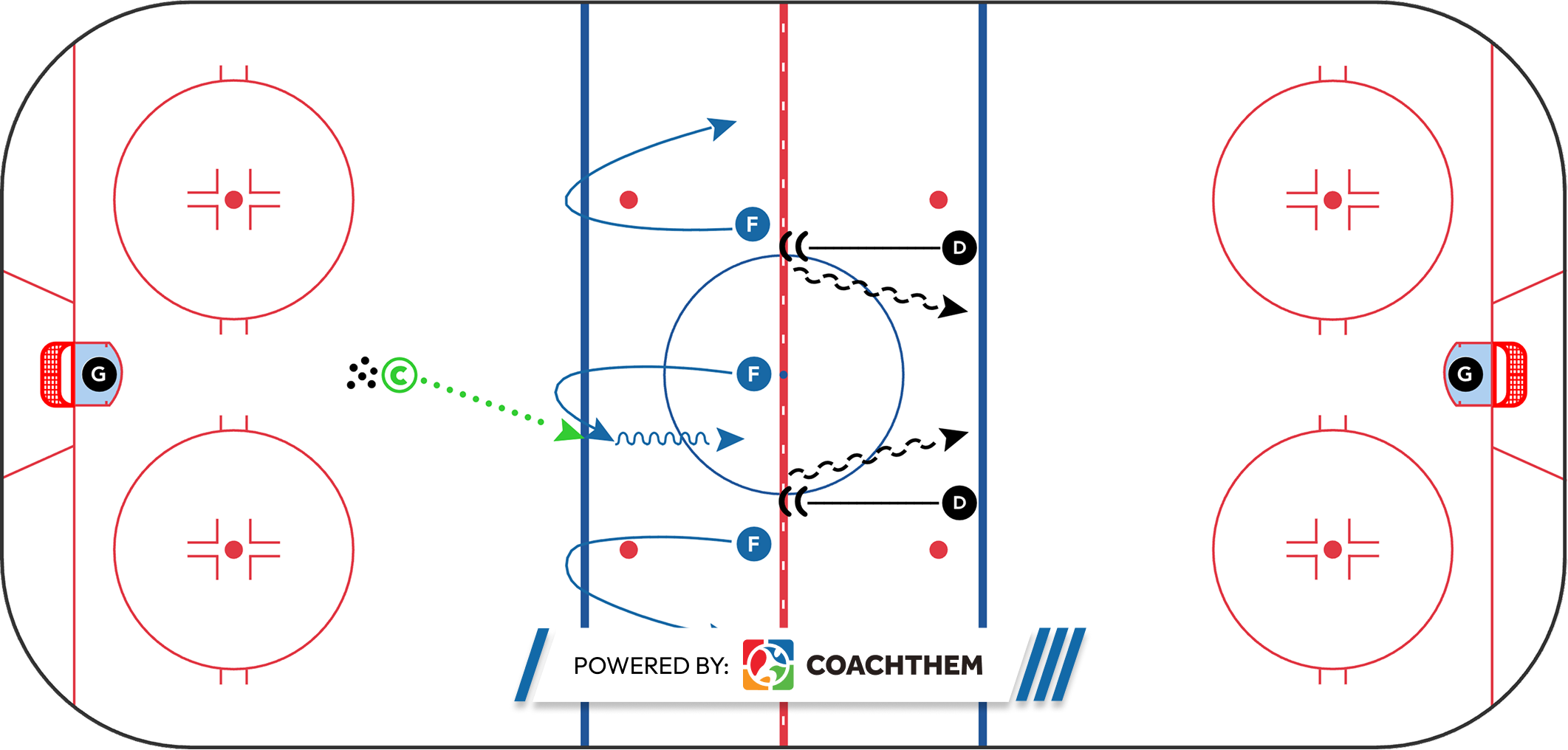
Sometimes coaches try to put five different teaching points into one drill. The result? Nobody learns any of them. This is one of those drills that proves simple can be very effective. The objective is straightforward. The defensemen work on maintaining a tight gap, while the forwards work on finding solutions when time and space disappear. Because let's face it, not every rush is going to look like a highlight reel. Good teams close quickly. Good defensemen stay in your face. This drill forces forwards to make quick decisions and execute under pressure. As a coach, you can easily adjust when the defensemen pivot, which changes the reads for the attacking players. Simple setup. Clear objective. Lots of repetitions. Sometimes that's exactly what players need. If you want, you can ask your forwards that they are not allowed to do the same entry back to back. Forcing them to think even more.
Practice Like A Pro 12.0 - SAG 1v1 NZ
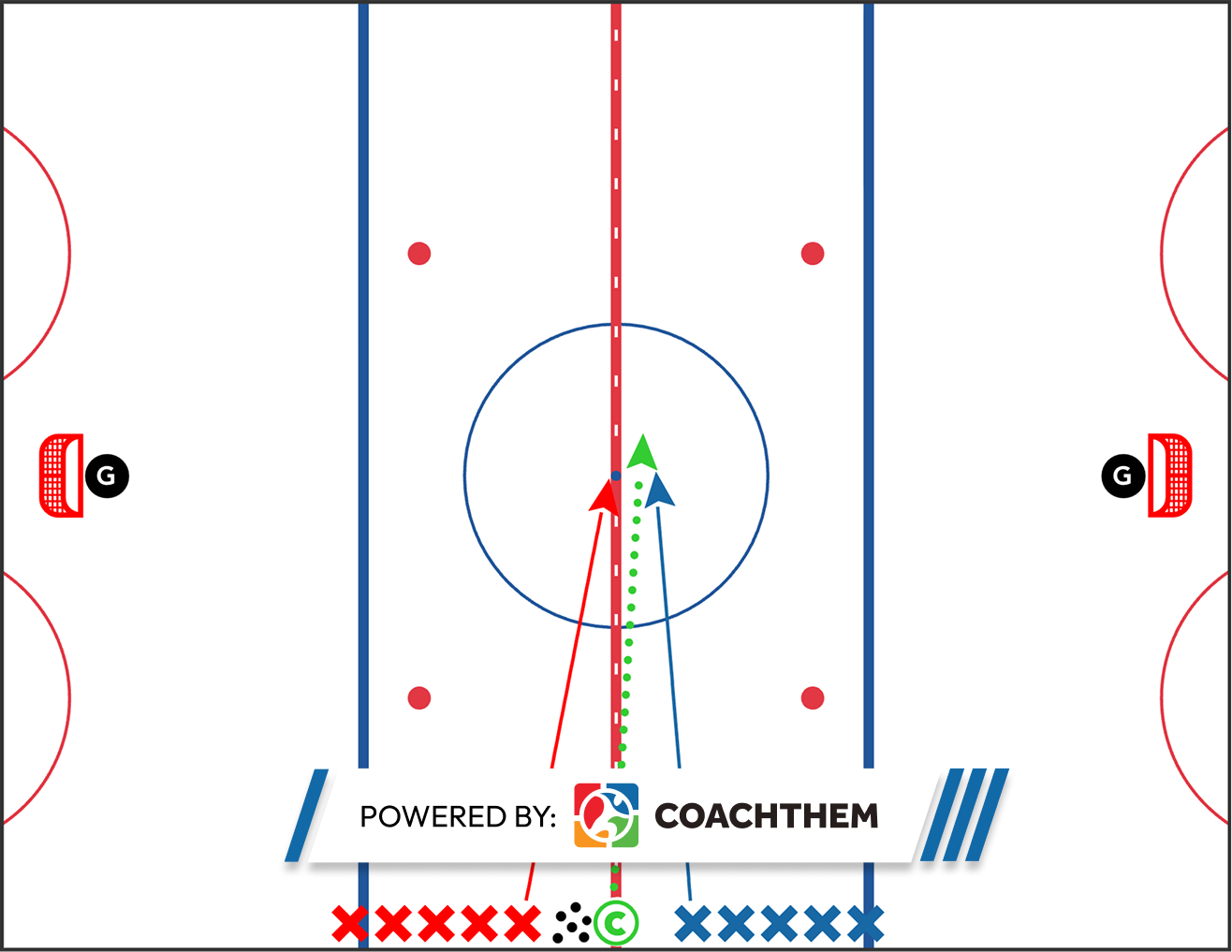
If you're looking for conditioning, compete level, puck protection, and a quick way to find out who hates losing, this drill checks all the boxes. The setup is simple: a 1-on-1 in the neutral zone with enough space for players to attack, defend, and protect pucks. You can move the nets closer together or farther apart depending on what you want to emphasize.
You can also add a second player or create advantages and disadvantages depending on the age and skill level of your team. What I love about this drill is that players can't hide.
There's no teammate to bail them out. No one to blame. No one to point at afterward. It's just you, the puck, and the player across from you. And somehow those drills always seem to get competitive in a hurry.
Practice Like A Pro 12.0 - PSD Approach High Low
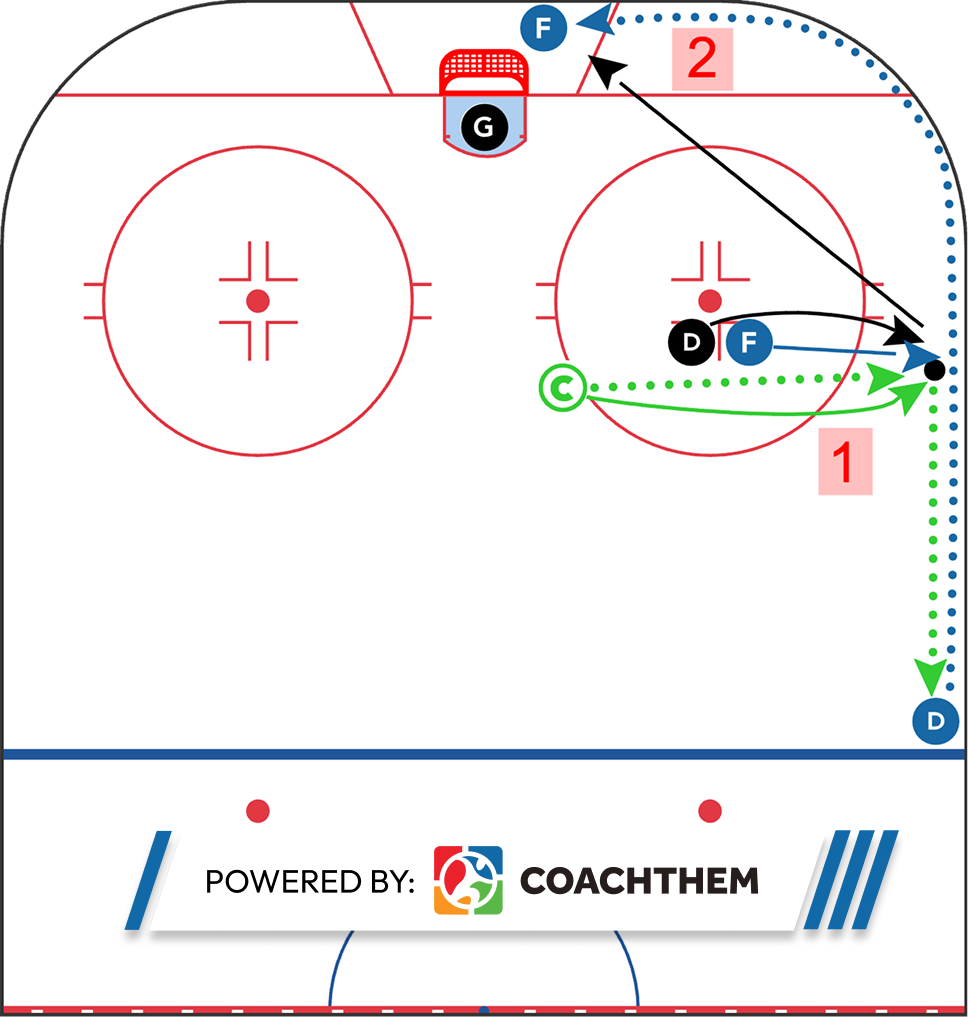
This drill slows things down a little, which is exactly why it's valuable. Defensemen work on approaching properly, leading with their stick, wrapping, pinning, and then attacking the second puck. You can use a coach as the offensive player or replace the coach with another player to make it more game-like. The biggest coaching point here is patience.
Too often players rush through defensive skills because they think faster automatically means better. Not in this case. Take the time to teach the details properly. Let players understand positioning, stick placement, body angle, and timing. Sprint speed is great.
But sprinting into the wrong spot is still the wrong spot.
Practice Like A Pro 12.0 - SAG 2v2 NZ with Coaches
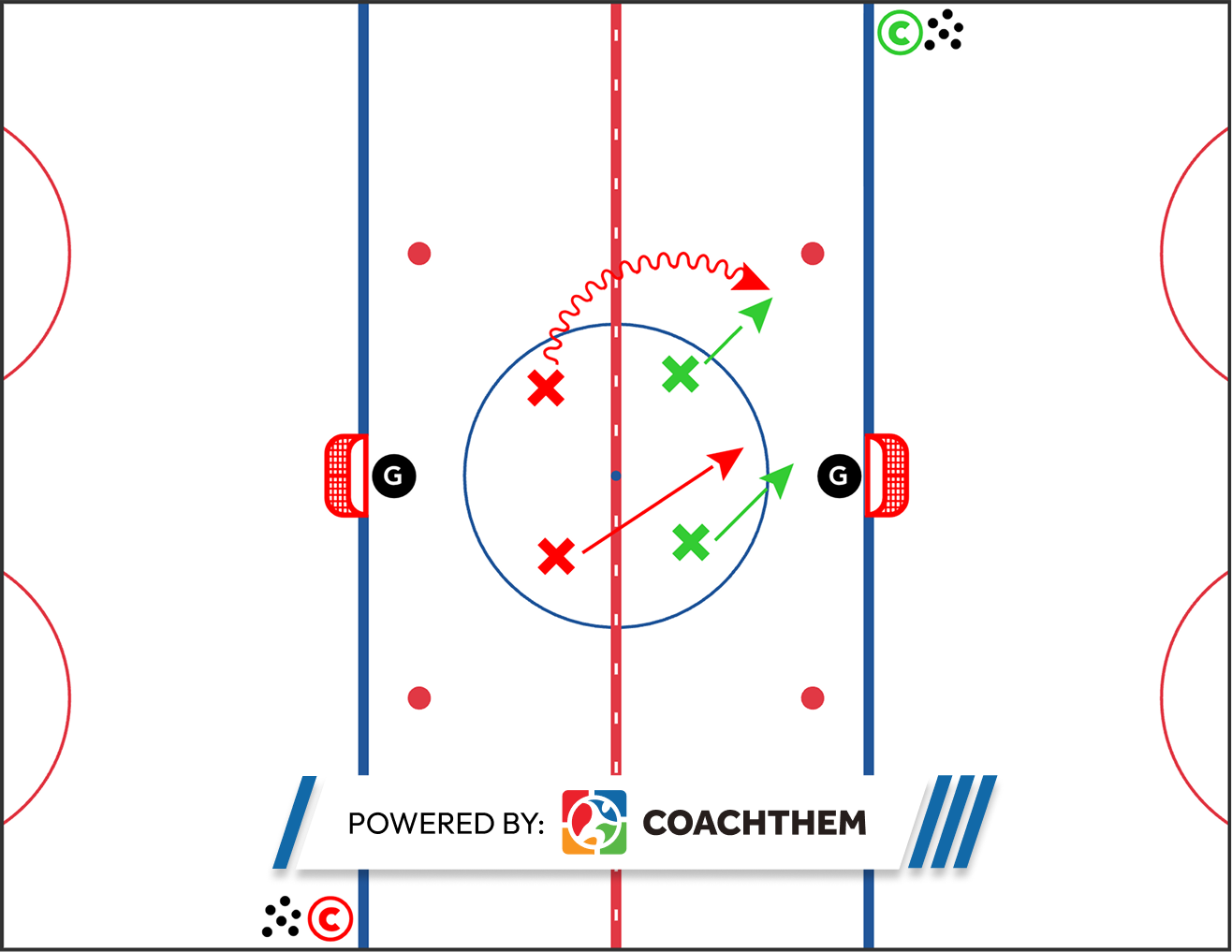
I don't know about your team, but line changes were a challenge for us this season.
And yes, we're talking about professional hockey. Sometimes it was part of the game plan.
Sometimes it definitely wasn't. This drill adds a realistic line-change element to a traditional 2-on-2 neutral zone game. The unique part is that players must change directly from the bench while the play is ongoing. This season we even drew a line about four feet from the bench. Once a player crossed inside that line, the next player was allowed to jump into the play. The result? A lot more realistic decision-making. Every change creates a new situation. Players have to read whether they should attack, track back, protect the middle, or pressure the puck. The game never stops for line changes. Why should practice?
One thing I've learned over the years is that players rarely remember how complicated a drill was. They remember whether it was competitive. They remember whether it challenged them. And they remember whether it looked and felt like hockey.
The drills in this month's edition aren't complicated, but they force players to communicate, compete, make reads, and execute under pressure. Those habits show up every night, regardless of age or level. As coaches, we sometimes search for the perfect drill when what we really need is a good drill with a clear purpose. Keep it simple. Keep it competitive. Keep players engaged. And if nobody asks, "Coach, what are we doing here?" for at least one full practice, consider it a victory.
About Mitch Giguere
Mitch Giguere is a father of four children and a hockey enthusiast. He is currently the Director of Hockey Operations and Head Coach for the Greensboro Gargoyles in the ECHL, affiliate of the Carolina Hurricanes (NHL) and Chicago Wolves (AHL). In addition, Mitch is a former KHL coach and has obtained his High Performance 2 certification from Hockey Canada.
Mitch also has an Advanced Coaching Diploma (NCCP4) and the Learning Accelerator Certificate received through the Canadian Sports Institute. As a CoachThem Teammate, Mitch contributes monthly blogs focused on skill-specific drills, practice efficiency, and modern coaching habits.
Frequently Asked Questions
What is the focus of Practice Like A Pro 12.0?
Practice Like A Pro 12.0 focuses on simple, competitive drills that help players communicate, make reads, protect pucks, manage pressure, and build habits they can use in games.
Why are simple hockey drills often more effective?
Simple drills give players a clear objective and more repetitions. Instead of overloading them with too many decisions, they help coaches teach one purpose with better pace, focus, and execution.
How does the two-puck passing drill help players?
The two-puck passing drill helps players improve hand-eye coordination, awareness, timing, and communication because they are passing one puck while receiving another at the same time.
What makes the SAG 2v2 NZ with Coaches drill useful?
The SAG 2v2 NZ with Coaches drill adds realistic line changes into a small-area game, forcing players to read whether they should attack, track, protect the middle, or pressure the puck.

Now available on iOS — access your saved practice plans on the go.
Build Better Practices — Faster
Trusted by NHL, PWHL, and youth coaches across the world.
Start Your 10-Day Free TrialAlready have an account? Log in
Know other coaches who’d love CoachThem?
Join CoachThem Rewards and earn commissions for every referral.
Written by Mitch Giguere, in collaboration with the CoachThem Team
Recommended Posts

Mike Weaver on The Leverett Ball Show: From NHL Defenseman to Building Better Coaching Tools
CoachThem Co-Founder and CEO Mike Weaver joins The Leverett Ball Show to discuss his NHL career, player development, leadership, and life after hockey.
Practice Like A Pro 13.0
Improve rim retrievals, wall play, and breakout decisions with Mitch Giguere’s Practice Like A Pro 13.0 hockey drills focused on handling rimmed pucks under pressure.
How Bethel University Men’s Hockey Uses CoachThem Every Day
See how Bethel University Men’s Hockey uses CoachThem for pre-season planning, daily practices, special teams, staff collaboration, and a seven-year coaching archive.