

March Practice Planning for Hockey Coaches
March is when hockey practices start to look different.
The foundation of the season is already built. Players know the systems, they understand the structure of the team, and most of the skill development work has already been done. Now practices shift toward execution, pace, and game-like repetition.
The challenge for coaches is turning those priorities into structured practices that make the most of limited ice time.
This is where tools like CoachThem become useful as a practical way to organize drills, visualize practice structure, and share plans with your staff.
This guide focuses on two things:
- what hockey coaches should emphasize in March practices
- how to build those practices inside CoachThem so they actually work on the ice
Late-season hockey is usually decided by who executes faster, supports better, and handles pressure more cleanly. That is why March practices need to become more specific, more competitive, and more connected to real game situations.
What Changes in March Practices
Late-season practices are not about reinforcing the habits that often decide games: retrieving pucks under pressure, executing clean breakouts, attacking quickly in transition, creating scoring chances around the net, and maintaining strong defensive positioning.
Practices that simulate real game situations help players react faster and make better decisions when those moments appear during competition.
One of the most effective ways to create those conditions is through small-area games and station-based drills, which increase puck touches and intensity while keeping players engaged.
Small-area drills are particularly valuable because they force players to read pressure quickly, make decisions in tight spaces, and handle the puck under pressure, exactly the situations they face in games.
Development research consistently shows why these drills are so effective: When the playing area is reduced, puck touches per player can double, shot attempts increase by up to six times, and pass receptions increase by up to five times compared with full-ice play.
In practical terms, that simply means players are involved in the play far more often, which is exactly what coaches want during late-season practices in March.
The Structure of a Good March Practice
A typical late-season hockey practice usually follows a simple structure:
- Warm-up and puck touches
- Skill reinforcement drills
- Game-situation drills
- Small-area competition
- Scrimmage or special teams
Many full practice plans follow this structure because it keeps players active and maximizes the value of expensive ice time.
Clear structure also matters because players develop faster when they spend less time waiting and more time actively involved in drills or games. Station-based work and smaller drill areas help maintain pace and attention, especially late in the season when habits matter most.
Example: Breakout Transition Game
One of the most important habits teams develop late in the season is transitioning quickly from defense to offense. Small-area games are a powerful way to reinforce this because players must make fast decisions under pressure while maintaining proper structure.
2v2 / 3v3 Across Ice Breakout Game
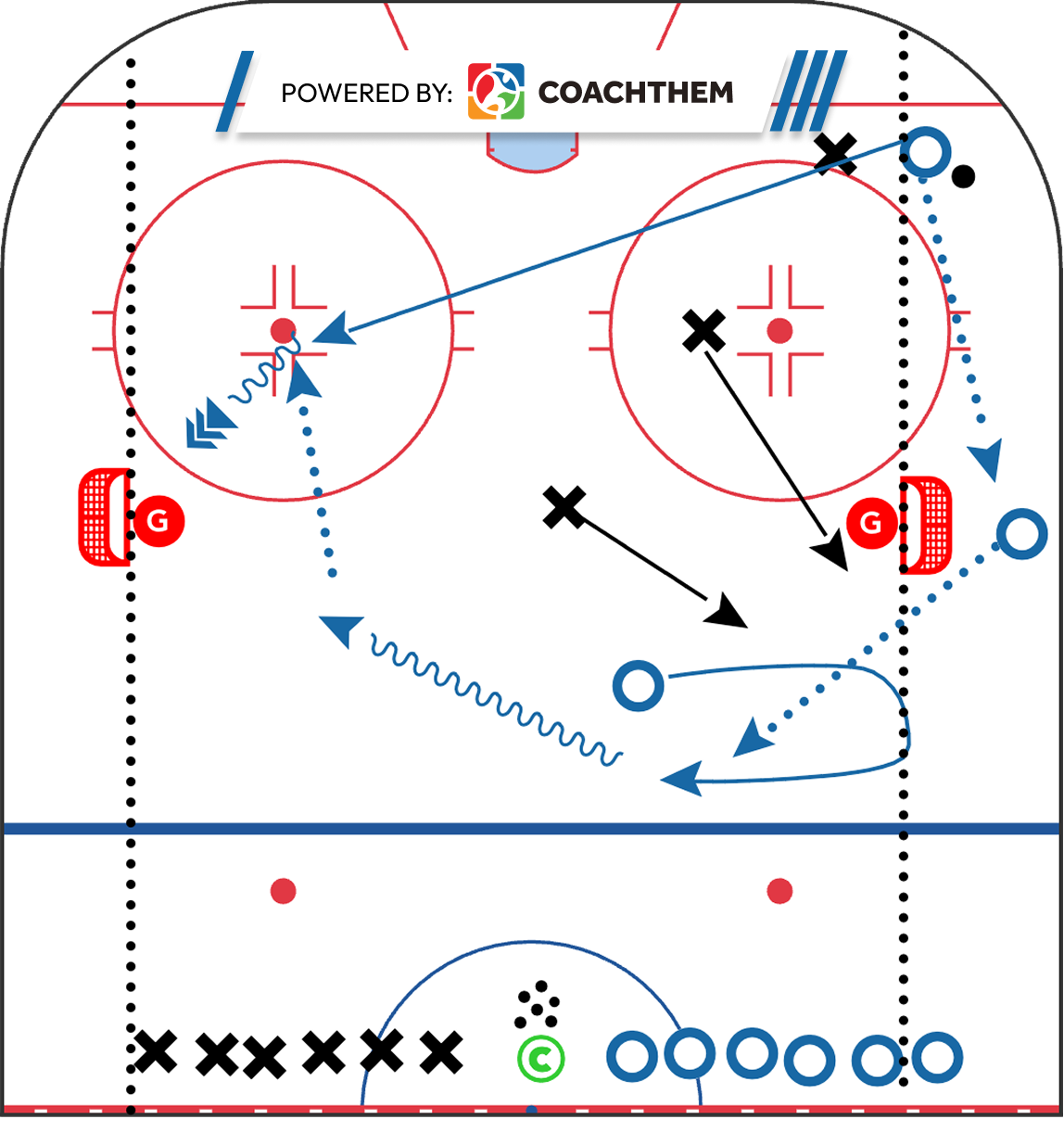
This small-area game teaches players how to retrieve the puck, organize a breakout, and transition into attack before pressure fully develops.
Execution:
- Nets are placed higher than in a typical cross-ice game to create more width and passing options
- Players who are not actively in the game line up at the red line
- When a team gains possession, they must first take the puck below their own goal line
- From there, the team must execute a breakout before attacking the opposite net
- Coaches can require the defending team to “tag up” in their half of the ice before applying pressure
This sequence forces players to organize their breakout structure before transitioning to offense, reinforcing good habits under competitive conditions.
Why Coaches Use This Drill
Small-area games like this replicate the chaos of real game situations while still teaching structure. Players must communicate, support the puck carrier, and identify open space quickly.
Because teams must move the puck below the goal line before attacking, players repeatedly practice the first pass of the breakout and the supporting routes needed to exit the zone cleanly.
Coaching Focus
- Supporting the puck carrier during retrievals
- Communication between teammates during the breakout
- Moving the puck quickly to open space
- Transitioning from defense to offense with speed
Transition Play and Quick Attacks
Another key focus for March practices is transition speed.
In modern hockey, many goals come from quick transitions when the defense turns a breakout into an attack.
A simple drill progression often looks like this:
- defense retrieves puck
- breakout pass to winger
- quick regroup or transition
- attack the zone
Transition drills like breakout-regroup-attack sequences help simulate how plays develop in real games and allow players to practice multiple game situations within one drill.
In fact, many high-level teams practice continuous breakout drills where one unit breaks out while the next unit prepares to attack, keeping the pace of practice high. That is why drills that connect breakouts with rush attacks are extremely valuable late in the season.
This type of drill becomes even more valuable when you connect it to how modern hockey is played. Teams that move the puck quickly through the neutral zone attack before the opposing defense can get set. That is why the best transition drills are not just skating patterns. They force players to move the puck, support underneath it, and attack with speed.
A relevant stat here is that in reduced-space or transition-heavy environments, players still get significantly more touches and pass receptions than in static full-ice drills, which is one reason why coaches use connected transition drills instead of isolated rush patterns.
Small-Area Games for Decision Making
One of the best ways to develop defensive awareness and quick transitions is through competitive small-area games. These drills force players to react quickly, support teammates, and transition from offense to defense in tight spaces.
Midget - Small Area Transition Game
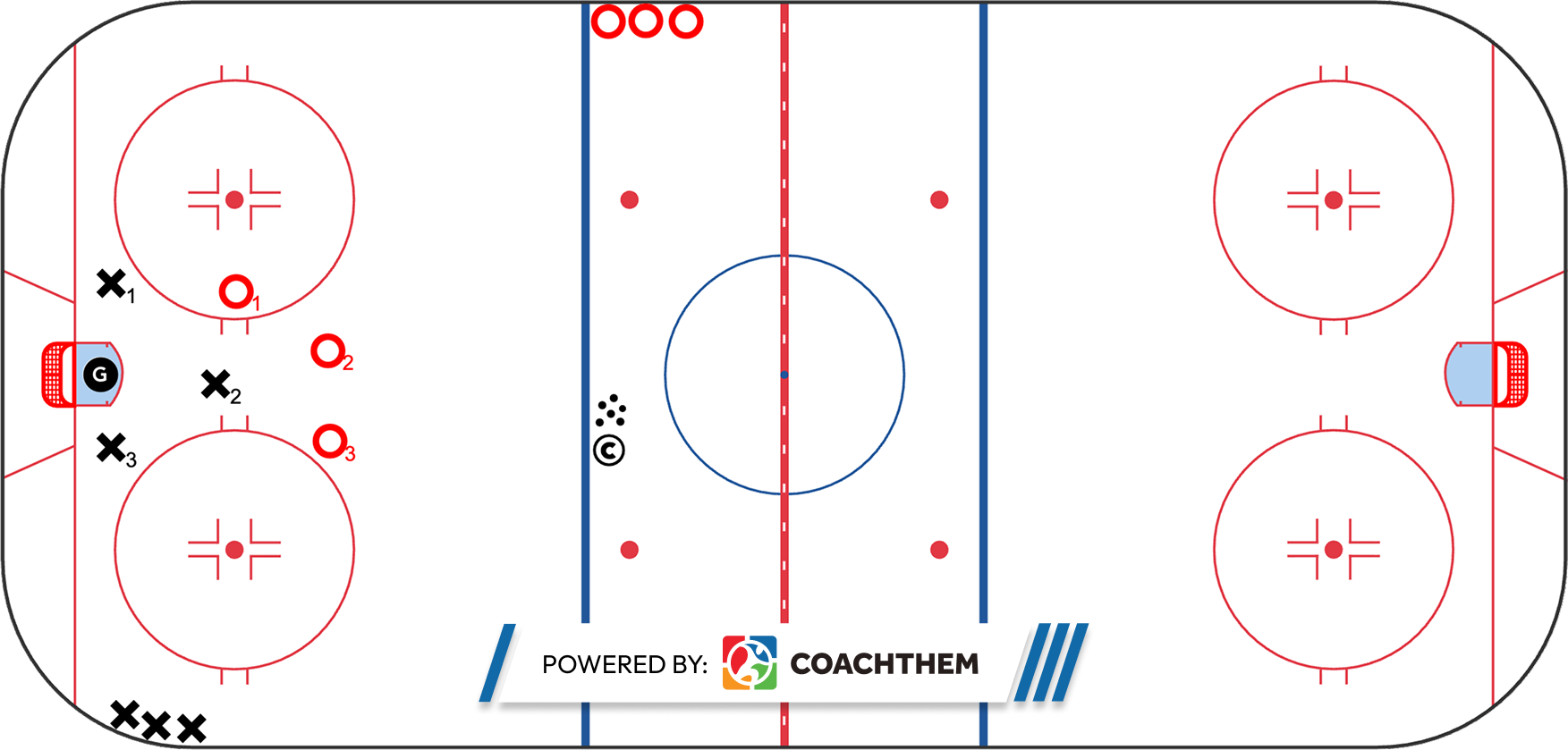
This drill focuses on puck protection, quick decision-making, and defensive transitions by forcing players to immediately react when possession changes.
Why Coaches Use This Drill
Small-area transition games create a high-tempo environment where players must constantly read pressure and react quickly. Because players immediately switch from offense to defense after a turnover, they develop stronger awareness and quicker defensive reactions.
The drill also reinforces the importance of supporting the puck carrier and making quick outlet passes under pressure.
Coaching Focus
- Protecting the puck in tight areas
- Quick decision-making under pressure
- Supporting teammates along the boards
- Immediate transition from offense to defense
- Sprinting out of the zone to create separation
Research and coaching resources from Hockey Canada emphasize that small-area games help players read, react, and adapt to pressure while improving puck handling and skating under confinement. Hockey Canada reports 2x greater puck touches per player, 6x greater shots per player, 2.75x greater shots on goal per minute, 5x greater pass receptions, 2x greater pass attempts, and 2x greater puck battles in small-area formats.
Inside CoachThem, these drills are easy to build visually:
- shrink the playing surface
- add cones or boundaries
- place player starting positions
- draw puck movement routes
This makes it easier for assistants and players to understand the objective before stepping on the ice.
Why Coaches Use CoachThem for Practice Planning
The biggest benefit of using CoachThem is organization.
Instead of scattered notes or diagrams on whiteboards, coaches can build a digital drill library and reuse effective drills year after year.
Some practical advantages include:
- storing drills in a personal library
- quickly building practice plans
- sharing drills with assistant coaches
- organizing drills by theme or category
Drills and practice plans can also be shared with other coaches, making collaboration easier within a coaching staff.
That matters most in March because practices often need small adjustments rather than full rebuilds. Coaches may want to keep the same theme but change the pace, the spacing, or the pressure. A digital practice plan makes those changes much easier.
Coaching Principles That Matter Most in March
Regardless of how practices are organized, the priorities remain the same.
Focus on habits that win games. Important habits include stopping at the net, supporting the puck, making quick breakout passes, maintaining strong backchecking effort, and staying disciplined in defensive positioning.
Practices should reinforce these habits repeatedly through competitive drills and game-like situations.
Modern hockey is played at high speed and often in tight areas, which is why coaches increasingly build practices around decision-making, pressure, and puck support instead of long static reps. The more often players are placed in those game-like situations, the more natural those habits become. The best March practices are the ones that give players repeated exposure to the exact situations that decide games.
Frequently Asked Questions
What should hockey coaches focus on in March practices?
March hockey practices should focus on execution, pace, and game-like situations rather than teaching new systems. Coaches typically emphasize puck retrievals under pressure, quick breakouts, transition play, net-front scoring habits, and defensive positioning.
Why are small-area games important in hockey practice?
Small-area games increase puck touches, passes, and shot attempts compared with full-ice drills. Research shows players can get up to 2x more puck touches and 6x more shots, which helps improve decision-making and puck control under pressure.
What is a breakout execution drill in hockey?
A breakout execution drill trains defensemen and forwards to retrieve pucks in the defensive zone and exit the zone quickly with support. The goal is to connect puck retrieval, passing options, and transition to offense.
What are transition drills in hockey?
Transition drills teach players how to quickly move from defense to offense. They typically include puck retrieval, breakout passes, regroups in the neutral zone, and attacking the offensive zone with speed.
How can CoachThem help hockey coaches plan practices?
CoachThem helps hockey coaches organize drills, visualize practice structure, and share practice plans with their staff. Coaches can diagram drills, adjust practice flow, and store drill libraries for future practices.