Parent/Coach Meetings Made Easy: Organize, Communicate, and Plan with CoachThem
As the hockey, lacrosse, and soccer seasons get underway, coaches everywhere are preparing for one of the most important steps of the year: the first parent/coach meeting. These early conversations are about more than introductions - they set the tone for the entire season. Done well, they build trust, create alignment, and help avoid conflicts later on.
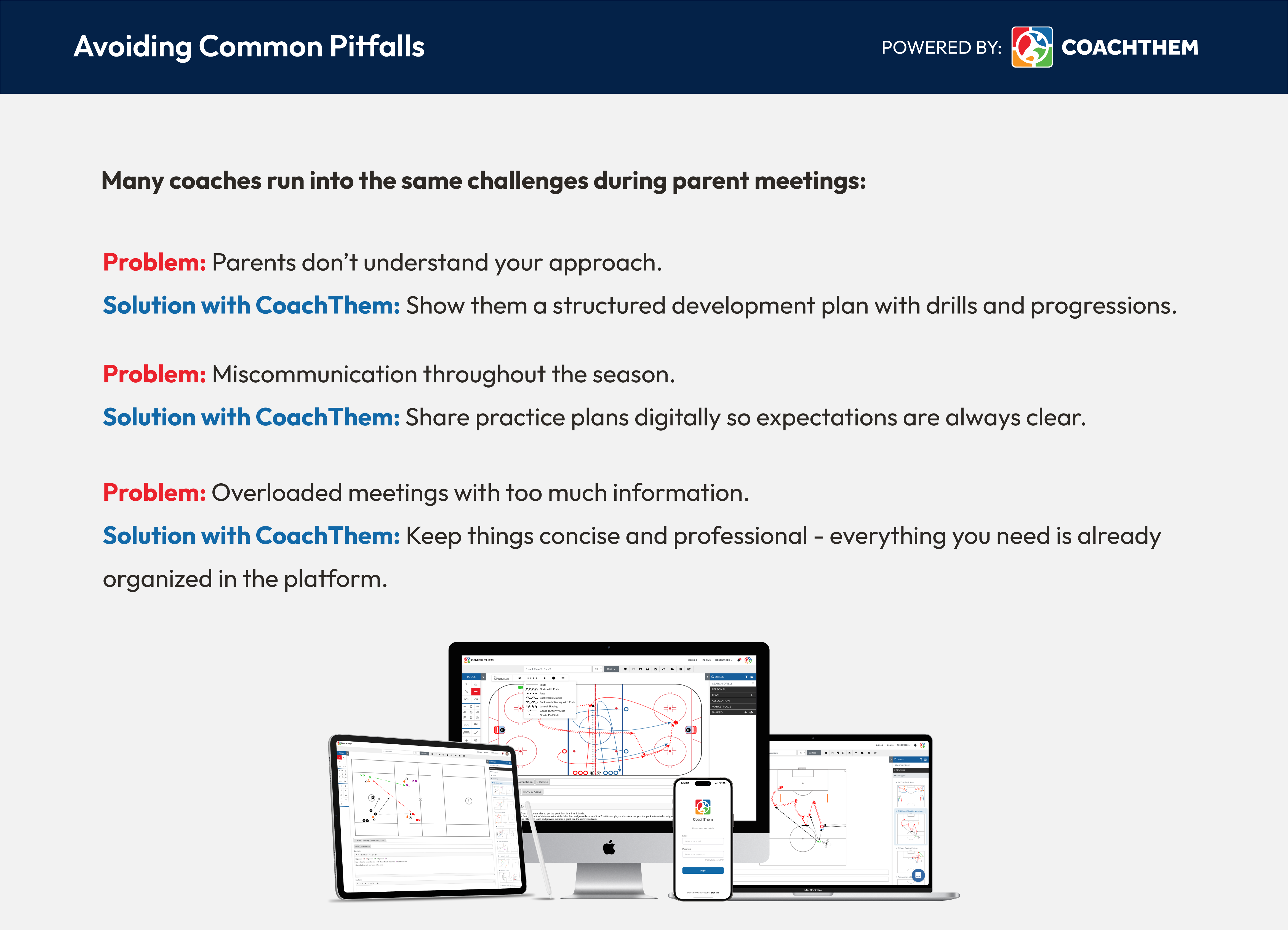
But here’s the challenge: without a clear plan, these meetings can easily become overwhelming or unfocused. That’s where CoachThem steps in. Our digital coaching platform makes it simple to organize, communicate, and plan - so your parent/coach meetings (and your season) start off on the right foot.
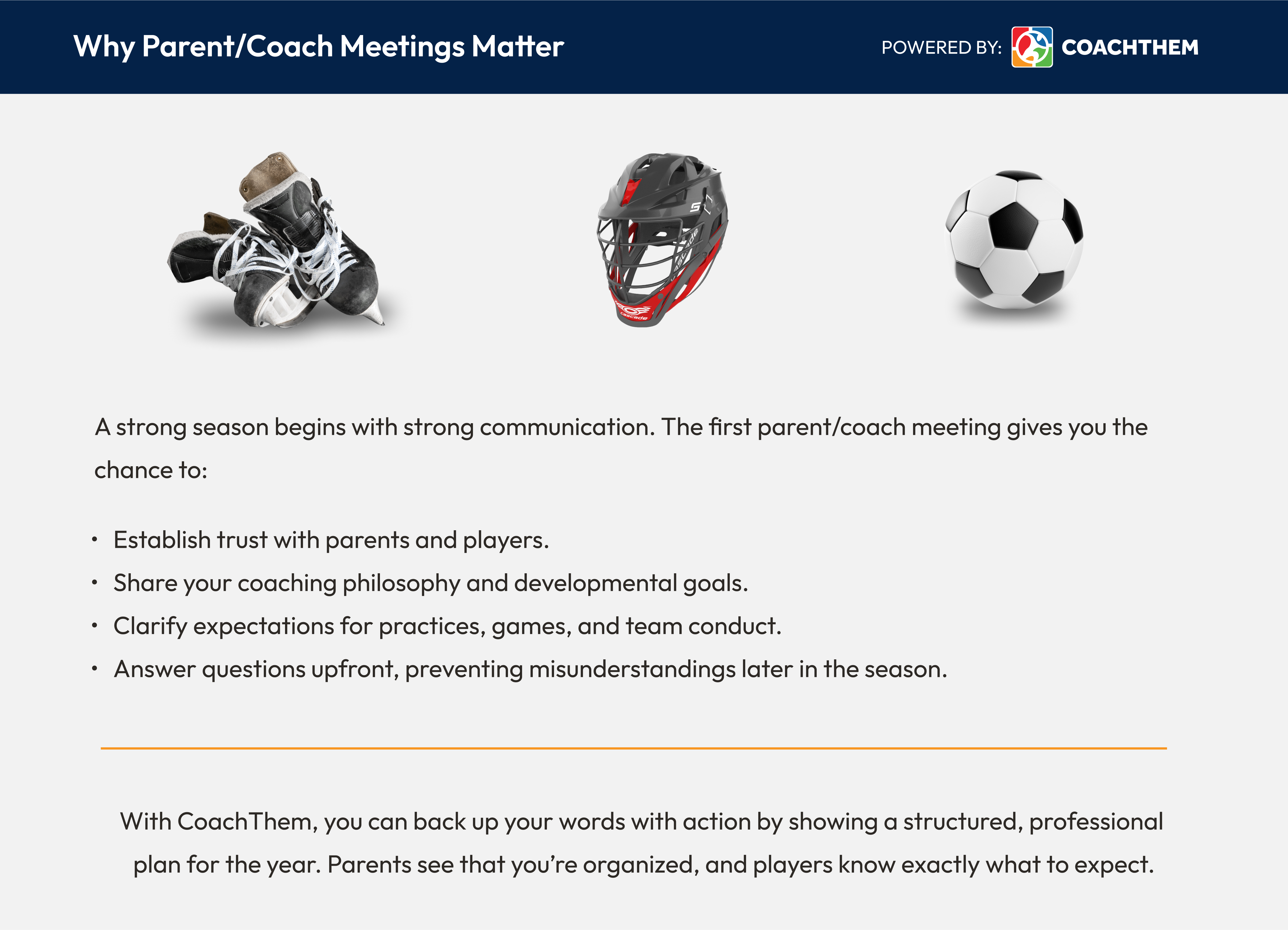
The Key Elements of a Successful Meeting
Borrowed from best practices, here’s how to run your first meeting effectively:
- Introductions: Introduce staff, managers, and support team.
- Coaching Philosophy: Share your approach, values, and focus on development.
- Program Details: Go over practice schedules, season structure, and codes of conduct.
- Parent Expectations: Set clear boundaries for roles, communication, and sideline behavior.
- Wrap-Up: Open the floor for questions and confirm next steps.
How CoachThem Helps:
- Digital Practice Plans: Present your season approach with plans already built in CoachThem.
- Resource Sharing: Export plans as PDFs and share them with parents for easy reference.
- All-in-One Organization: Keep drills, plans, and notes in one place, so nothing gets lost between meetings.
Start Your Season Right
These tips apply across hockey, lacrosse, and soccer. With CoachThem’s multi-sport surfaces, you can prepare, present, and share practice plans with confidence - no matter the game. The first parent/coach meeting isn’t just a formality - it’s the foundation of a successful year. By setting expectations early and showing professionalism, you’ll build trust and keep everyone aligned.
With CoachThem, you have the tools to make it easy. From hockey rinks to lacrosse fields to soccer pitches, CoachThem helps you organize, communicate, and plan - not just for practices, but for the entire season.
Start your free 10-day trial today and give your team the organized start it deserves.

Written by the CoachThem Team
Ditch the pen and paper! Sign up or log in to create professional digital drills in minutes.
Join CoachThem Rewards to earn money by referring other coaches and growing our coaching community!