

Why Small Area Games Belong in Every Hockey Practice Plan
Coach,
If you want your players to make better decisions during games, it starts with the habits they build in practice. To help my players develop those habits, one of the tools I’ve used the most over the years is small area games.
Here’s why I believe in them so strongly, how I use them, and my top 3 games that I bring on the ice regularly.

Why Small Area Games Really Work
In small spaces, players don’t have a choice. They must make decisions quickly.
- Less time.
- Less space.
- Much more pressure.
Over time, this makes a real difference. Players read the game better, react faster, and most importantly, they stop hesitating with the puck.
What I also love about small area games is the intensity they create—naturally.
- No need to over-push.
- No need to overuse your whistle on the ice.
- Players touch the puck more often, they stay constantly involved, and competition shows up on its own.
In short, the game itself creates intensity for us.
And because the situations are realistic—battles along the boards, quick plays around the net, offensive-to-defensive transitions—players experience in practice exactly what they’ll see in games.
The Reality: Half-Ice Practices
In minor hockey, we’re often stuck with half-ice practices, especially at younger levels.
That’s another reason why I recommend small-area games so much to coaches. They’re perfect for maximizing available space, keeping everyone active, and avoiding long lines.
How to Use Them Effectively in Practice
The key is to keep it simple.
- One clear objective.
- One key rule.
- Not too many instructions.
If you spend too much time explaining the drill, you kill the pace.
Then, adjust the space, not the game.
Too easy? Shrink the space.
Too hard? Open it up slightly.
Same game. Adjusted level. And most importantly—let them play.
Yes, corrections matter. But not on every whistle. Let your players find their own solutions.
My Top 3 Small Area Games
Here are the games that I use the most often. Simple games. Easy to adapt to half ice or to any age group.
1. Le Preneur de Décision (The Decision Maker)
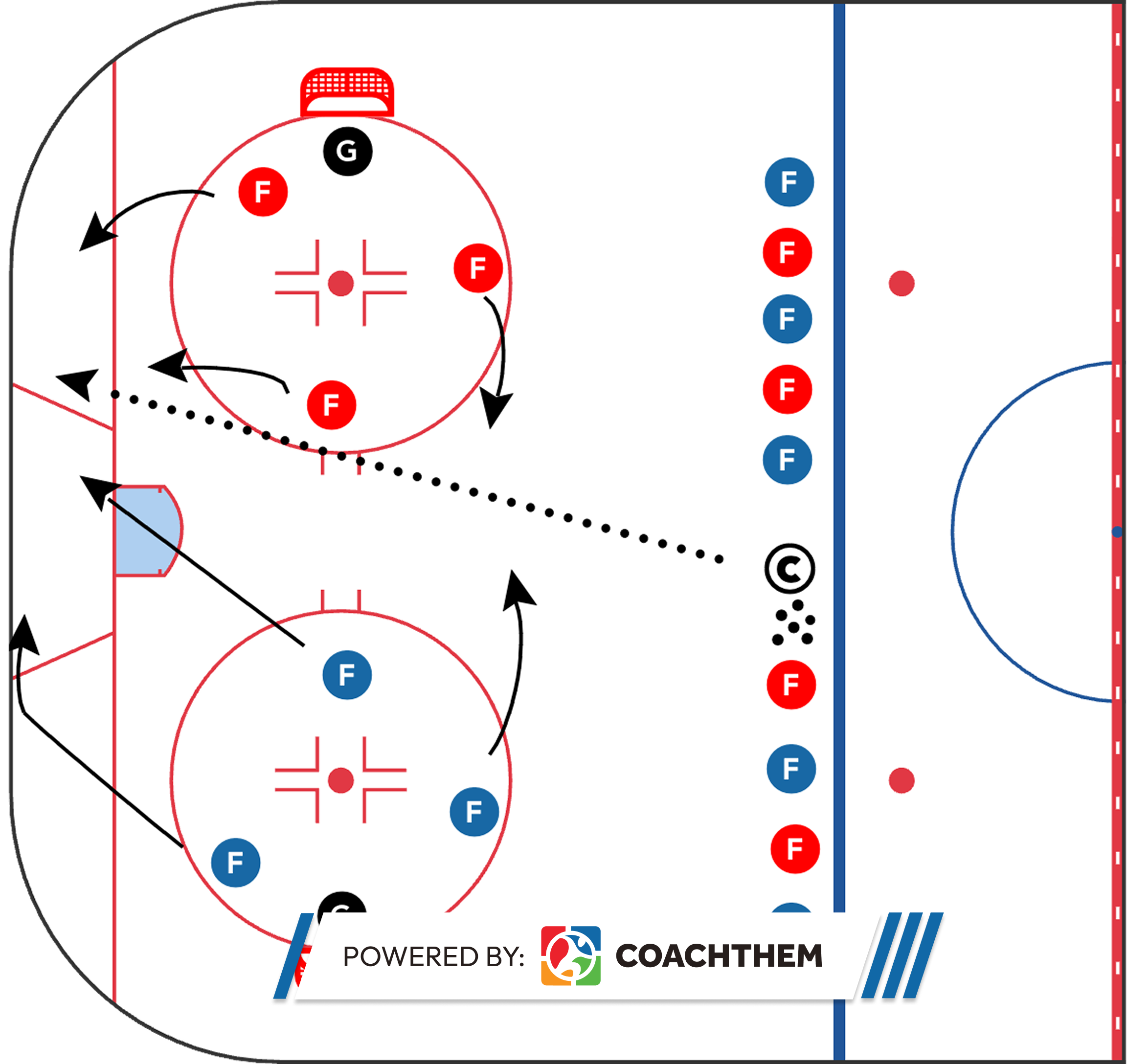
The Decision Maker is a competitive 3-on-3 small-area game designed to improve puck movement, decision-making, and offensive creativity. The coach initiates each rep by sending a puck into the zone, while adjusting rules on every repetition to challenge players in different ways. Each sequence lasts 30–40 seconds, keeping the pace high and the reads game-like.
2. Penguins JZR 4vs2
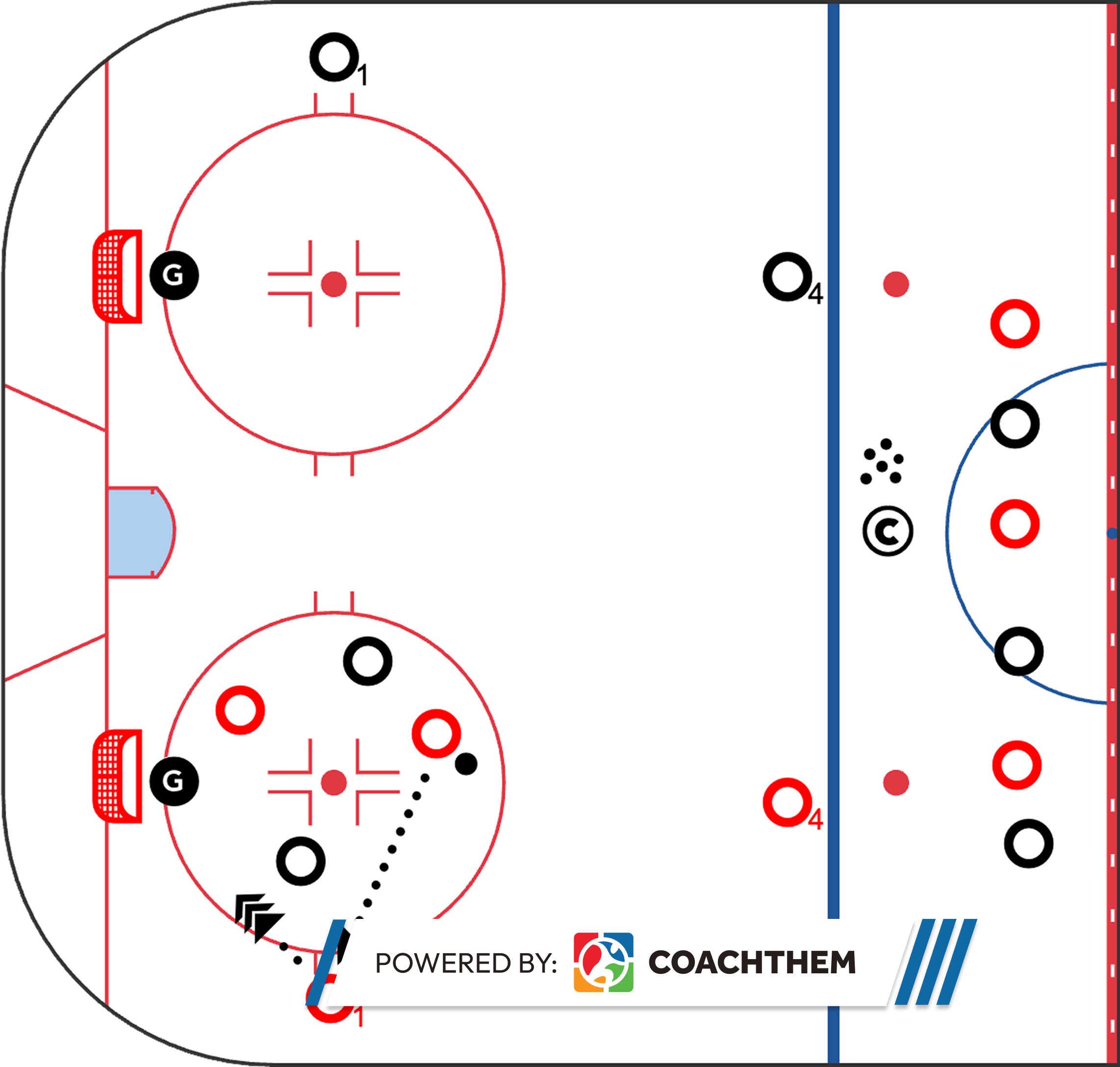
Penguins 4v2 is a dynamic small-area game that creates constant numerical advantages to challenge offensive decision-making and defensive positioning. Two players are constrained to the boards and blue line as pass-or-shoot options, allowing play to quickly shift from 2-on-2 into 3-on-2 or 4-on-2 situations. Short 30–40 second reps keep the tempo high while reinforcing puck movement and lane awareness.
3. Offensive 3vs3 v.2
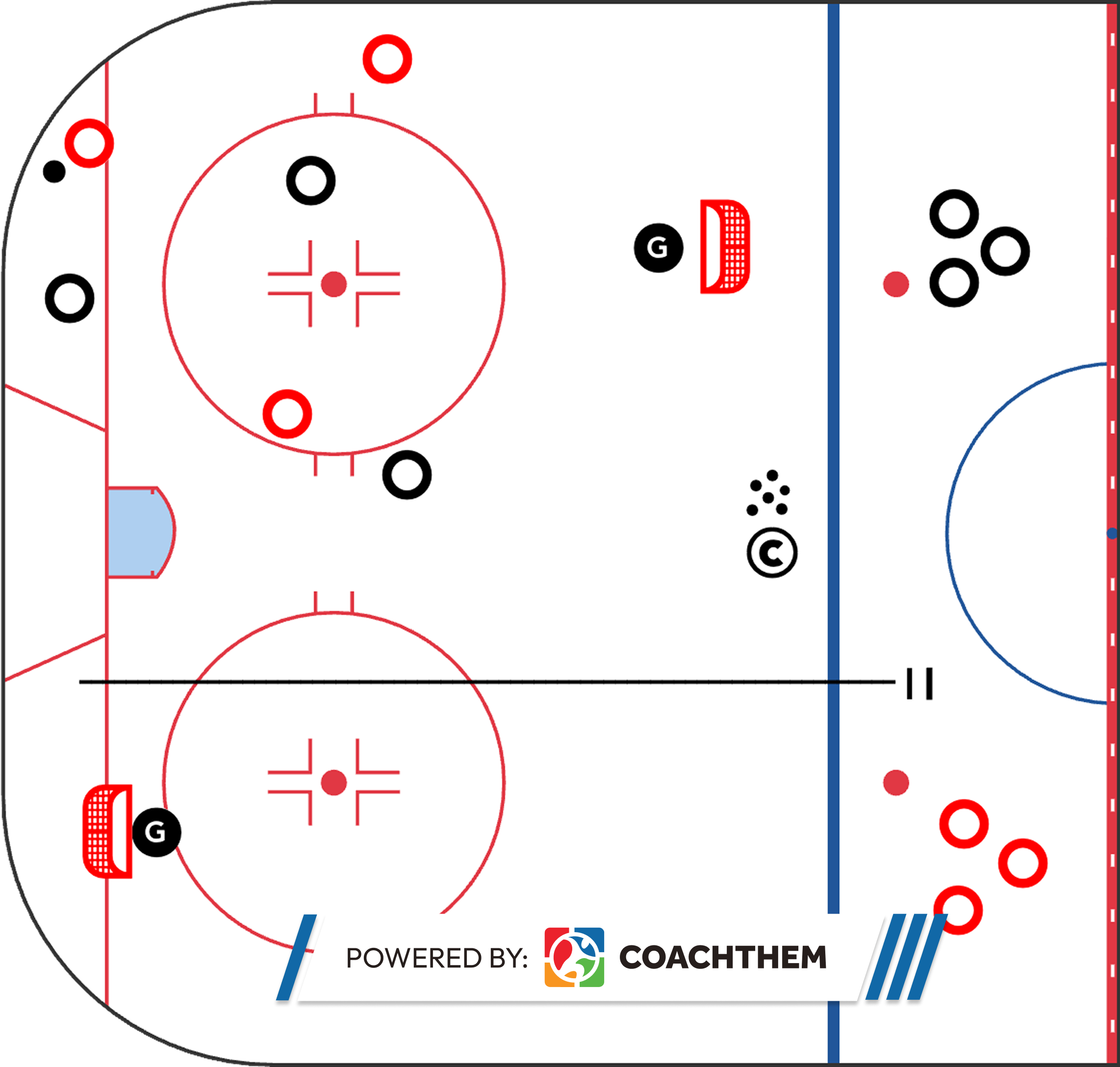
Offensive 3v3 is a fast-paced small-area game where both teams can score in either net, forcing constant awareness and quick transitions. The setup creates frequent odd-man situations, long passes, and deceptive plays while goaltenders stay engaged at all times. Short 30–40 second reps keep the intensity high before new players jump in to maintain flow.
How CoachThem Helps With Small Area Games
This is where I get the most out of CoachThem.
CoachThem allows me to:
- Quickly visualize small area games with clear, simple diagrams
- Adjust spacing and player numbers in seconds
- Save, organize, and reuse my favorite games
- Share drills easily with my coaching staff
Instead of reinventing the wheel every practice, I’ve built a reliable toolbox of small-area games that fit my group, my ice time, and my season plan.
It saves time—and helps me stay consistent behind the bench.
Final Thought
Small area games mean more decisions, natural intensity, and better transfer to games. Perfect for half-ice practices. Ideal for involving many players at once.
Bon coaching!
Coach Steve
About Steve Lauzon
Steve Lauzon is a minor hockey coach and educator with nearly three decades of experience behind the bench. He is the founder of Loz Hockey, a coaching platform launched in 2012 to help coaches simplify their season planning while keeping player development at the centre of every decision.
Steve remains deeply involved in minor hockey, mentoring coaches and sharing practical insights to help them feel prepared, organized, and confident throughout the season. As a CoachThem Teammate, he contributes content designed to support coaches both on and off the ice.
Follow Steve on TikTok, Facebook, and YouTube for coaching tips, drills, and updates.
Frequently Asked Questions
What are small area games in hockey practice?
Small area games are competitive hockey drills played in tight spaces that force players to make quick decisions under pressure. They recreate real game situations and increase puck touches, reads, and intensity.
Why are small area games effective in hockey practice?
Small area games limit time and space, which naturally increases pressure. This helps players read the game faster, react quicker, and carry those habits directly into games.
Are small area games good for half-ice hockey practices?
Yes. Small area games are ideal for half-ice practices because they maximize space, keep more players involved, and eliminate long lines, especially at youth levels.
How does CoachThem help with small area games?
CoachThem helps coaches visualize small area games, adjust spacing and player numbers quickly, save favorite drills, and share practice plans with staff, making practice planning faster and more consistent.