Why Station-Based Practices Are a Game Changer for Youth Hockey Development
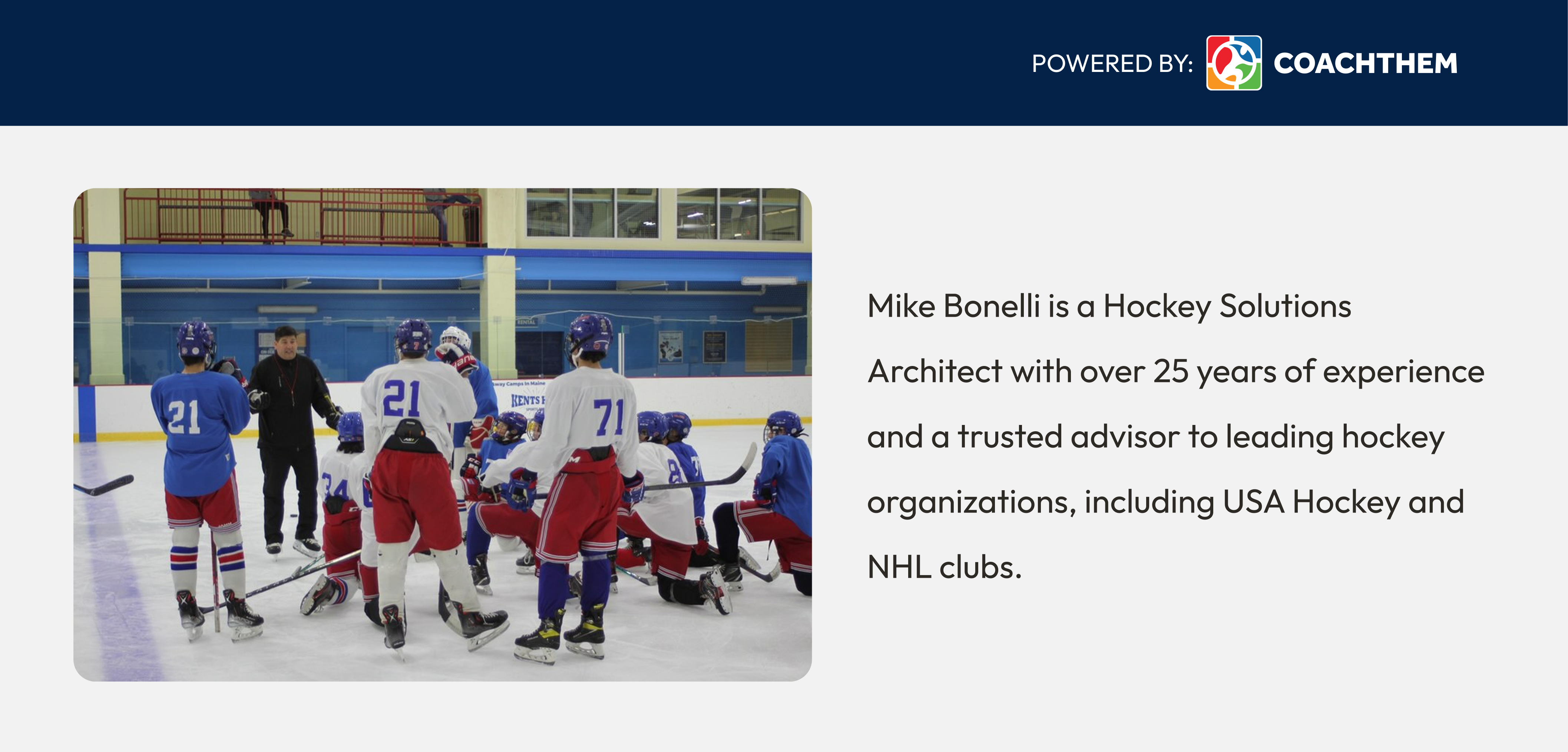
This week’s blog is written by CoachThem Teammate Mike Bonelli. In this piece, Mike shares how station-based practices can increase engagement, maximize repetitions, and support long-term youth player development.
At the youth hockey level, player development should always come before systems, wins, or standings. One of the most effective ways to support long-term growth, while keeping practices engaging and efficient, is through station-based practices. This approach shifts the focus from long lines and passive instruction to active learning, repetition, and individualized development.
Station-based practices divide the ice into multiple skill-focused areas where small groups of players rotate through targeted drills. Instead of waiting their turn, athletes are constantly moving, thinking, and learning. The result is more puck touches, more skating reps, and more opportunities to build confidence through repetition - key ingredients for skill development at a young age.
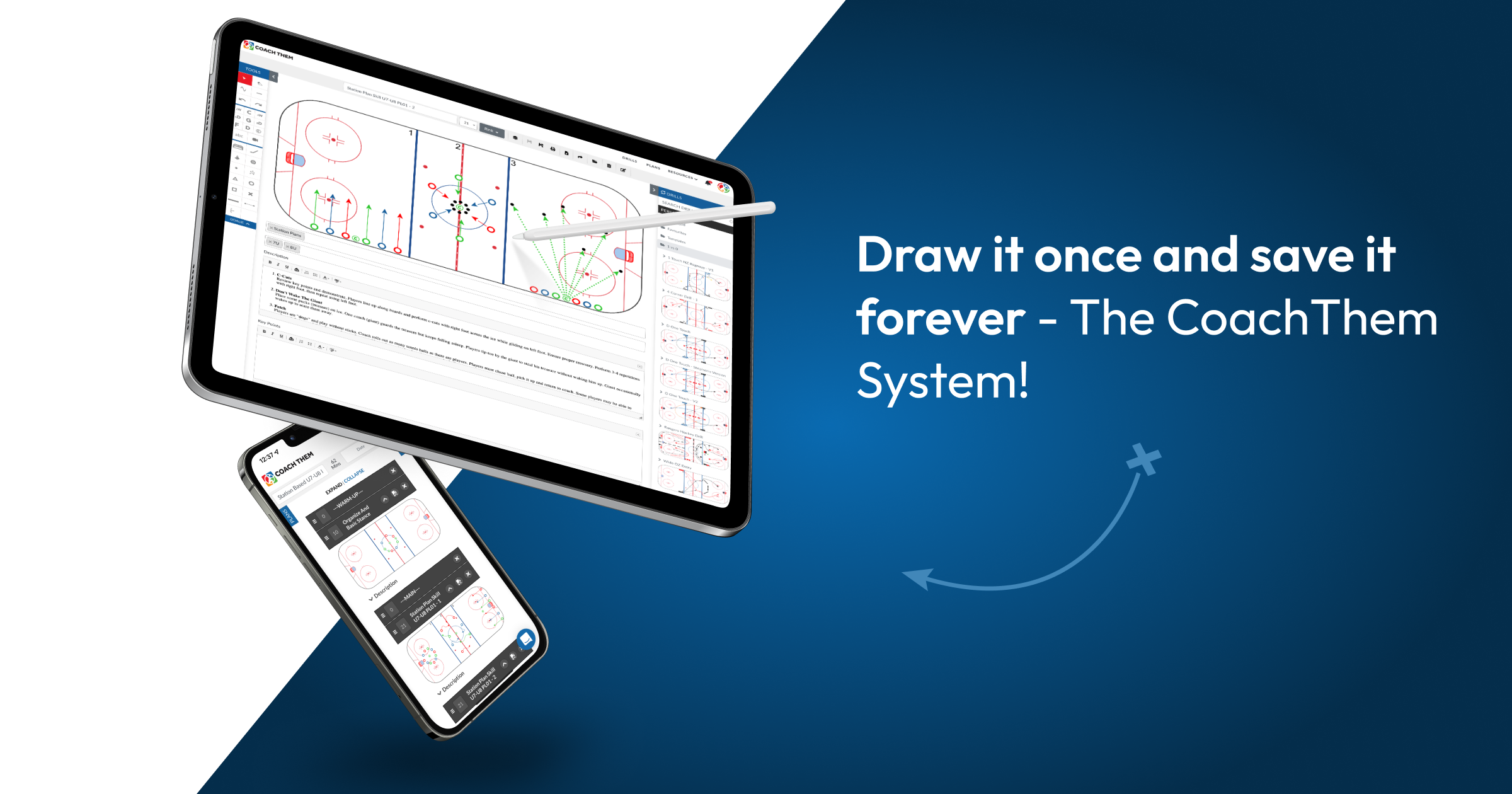
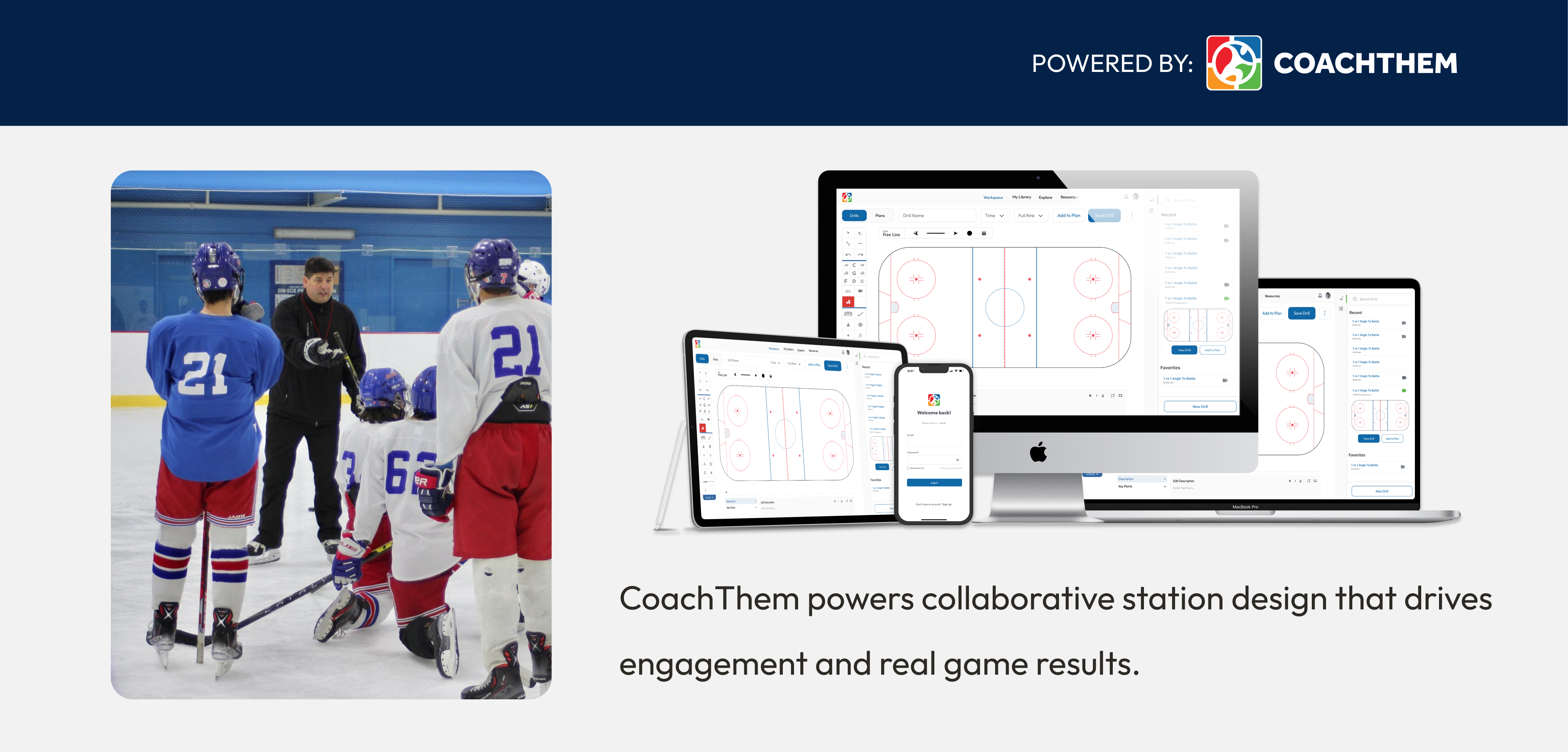
I find that after I have built a great library of stations with focus, definition and their structure in my CoachThem account I can add them to virtually any lesson plan I am developing and can easily articulate this to the rest of the coaching and support staff.
More Positive Repetitions, Faster Improvement
One of the biggest advantages of station-based practices is the sheer volume of positive repetitions players receive. Traditional full-ice drills often limit touches and slow down learning due to long lines and overcrowding. In a station-based model, players are actively engaged nearly the entire practice, allowing skills to be reinforced through consistent, quality reps.
This repetition builds muscle memory, improves decision-making under pressure, and helps young athletes develop comfort with the puck. The more frequently players perform a skill correctly, the faster it becomes second nature, leading to better performance in games.
I have found that having a “base” station built in CoachThem allows me to seamlessly go back to that station template each week and edit it just enough to built progressions into the drill or game without having to redraw the entire station from scratch. This allows me to built a great database of multiple progressions from just one station.
Individualized Teaching in a Team Environment
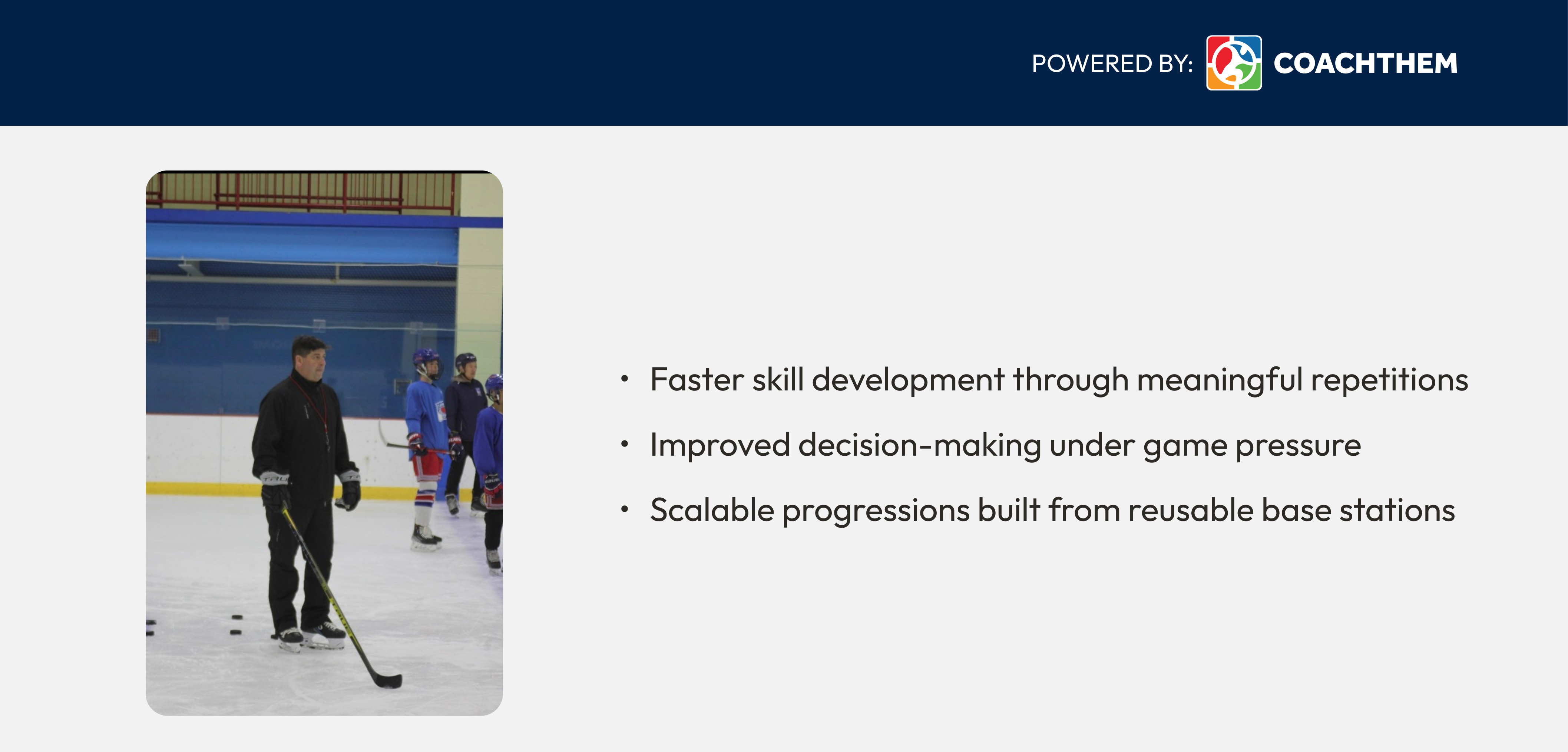
Station-based practices also allow me to take a more individualized approach to teaching. With smaller groups at each station, I can observe players closely, offer immediate feedback, and make adjustments tailored to each athlete’s needs. This environment makes it easier to identify deficiencies - whether it’s skating mechanics, puck control, positioning, or confidence, and address them in real time.
Rather than delivering broad instruction to an entire team, I can meet players where they are in their development. This personalized attention helps athletes progress at their own pace while still benefiting from a team-based setting.
Better Engagement, Better Learning
Young players learn best when they are engaged and challenged. Station-based practices introduce variety and creativity, keeping athletes mentally focused and excited to learn. New and evolving drill scenarios encourage problem-solving and adaptability, helping players transfer skills from practice into game situations.
This structure also supports different learning styles. Visual learners, hands-on learners, and verbal learners all benefit from the close interaction and active nature of station-based teaching. By using CoachThem and sharing the station with my staff I can also encourage feedback from them to add their teaching styles, drill edits and contribute to definitions and verbiage that might be more understandable and meaningful to our players.
Building Strong Foundations for Long-Term Success
Perhaps most importantly, station-based practices emphasize fundamental skill development - the foundation of long-term hockey success. Skating, puck handling, shooting, and decision-making are reinforced daily in a way that supports growth over time. Players who develop strong fundamentals at a young age are better prepared to handle the increased speed, physicality, and complexity of higher levels of play.
By focusing on development rather than outcomes, station-based practices create confident, skilled athletes who enjoy the game and stay motivated to improve.
Final Thoughts
Station-based practices are not just a coaching trend, they are a proven development tool that benefits players, coaches, and teams alike. By increasing positive repetitions, allowing for individualized instruction, and keeping young athletes engaged, this approach creates an environment where players can thrive.
For youth hockey programs committed to long-term development, station-based practices are one of the most impactful investments a coach can make and by using CoachThem and the draw it once and save it forever system I can be super efficient, stay on task and communicate to my teams and staff in a better way.

Frequently Asked Questions (FAQ)
Q: What is a station-based hockey practice?
A: A station-based hockey practice divides the ice into multiple small areas where players rotate through focused skill stations. This keeps athletes active, increases puck touches, and allows coaches to teach in smaller groups.
Q: Why are station-based practices better for youth hockey development?
A: Station-based practices prioritize repetition, engagement, and fundamentals. Young players get more quality reps, individualized feedback, and faster skill development compared to traditional full-ice drills with long lines.
Q: How many stations should be used in a youth hockey practice?
A: Most youth practices work best with 3-6 stations, depending on roster size and age group. The goal is to keep groups small enough so players stay active and receive coaching attention. What skills work best in station-based practices? Station-based practices are ideal for skating, puck handling, shooting, passing, small-area games, and decision-making drills. These fundamentals benefit most from repetition and focused instruction.

Written by CoachThem Teammate, Mike Bonelli
Ditch the pen and paper! Sign up or log in to create professional digital drills in minutes.
Join CoachThem Rewards to earn money by referring other coaches and growing our coaching community!