

Olympic Hockey Training Methods Coaches Can Use at Any Level
Olympic hockey pushes players and coaches into the most demanding environments the sport has to offer. Games are faster, mistakes are magnified, and there is no margin for error. To succeed, Olympic teams rely on structure, repetition, and disciplined decision-making—principles that are not exclusive to elite programs.
While most coaches won’t be preparing teams for the Olympic Games, the training methods used at that level are built on concepts that translate directly to youth, amateur, and elite hockey. Below, we break down Olympic hockey training methods coaches can use at any level, and how those ideas can be implemented through thoughtful practice planning and organization using CoachThem.
Neutral-Zone Systems
At the Olympic level, neutral-zone systems are used to control pace, limit risk, and force opponents into predictable decisions. Whether teams are protecting a lead or trying to slow down fast, skilled opponents, the goal is the same: eliminate clean zone entries and take away the middle of the ice through structure and discipline.
Rather than relying on constant pressure, Olympic teams emphasize positioning, spacing, and patience. Forwards apply controlled pressure while the remaining skaters maintain strong shape through the neutral zone, guiding puck carriers toward the boards and forcing dump-ins or low-percentage plays.
Why it works at any level
Neutral-zone structure reduces chaos, especially for youth and developing teams. Clear positioning helps players understand where they should be during transitions, leading to fewer breakdowns and more confidence defending as a unit. Instead of reacting late, players learn to anticipate plays and stay connected.
How to train it using CoachThem
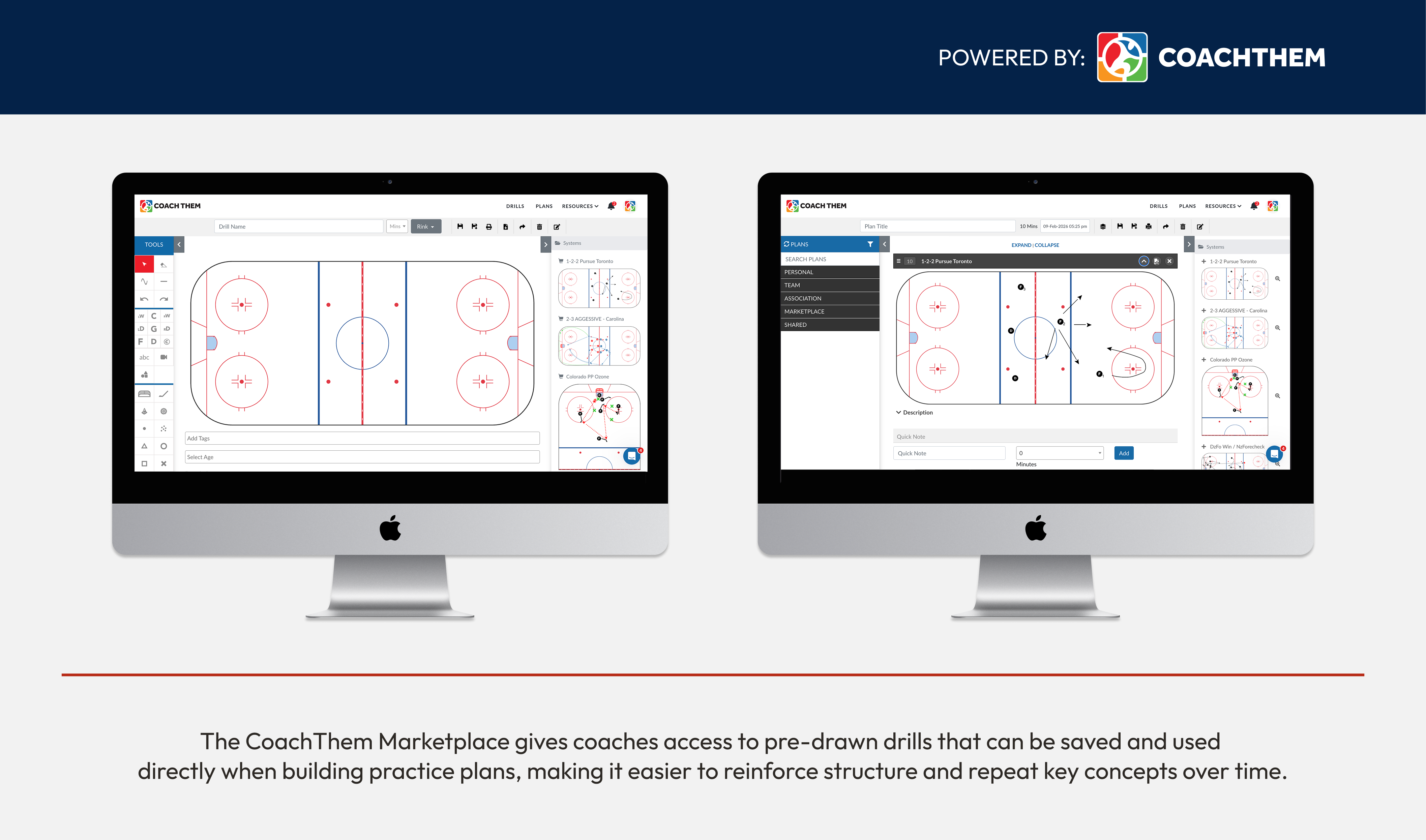
Coaches can group neutral-zone concepts into focused practice blocks in CoachThem, allowing players to repeatedly see the same structure and responsibilities. By saving and reusing system-based drills throughout the season, coaches reinforce habits through repetition.
Playing on Bigger Ice and Managing Space
Olympic hockey is often played on wider ice surfaces, which changes how teams exit the zone, support the puck, and manage speed through the neutral zone. With more space available, poor puck decisions are punished quickly, and soft passes allow forecheckers to close gaps.
Why it matters for developing teams
Even on standard rinks, teaching players to respect space and make firm, decisive plays leads to cleaner breakouts and faster transitions. Speed becomes a weapon when players understand how to use width effectively.
How to train it using CoachThem
Coaches can structure breakout and transition practices in CoachThem that emphasize strong first passes and immediate acceleration. By organizing drills that focus on spacing and puck support into a single practice plan, coaches ensure players repeatedly work on the same habits instead of treating breakouts as an afterthought.
Forechecking, Net-Front Play, and Offensive Pressure
Olympic teams combine structure with aggression. When opportunities arise, they commit to pressure, get pucks to the net, and create traffic in front of the goalie. Goals at the highest level often come from second efforts, screens, and deflections—not highlight-reel plays.
Why it works at any level
Net-front habits and consistent forechecking translate across all ages. Players who understand how to arrive at the net with purpose and apply pressure responsibly create more offensive chances and wear opponents down over time.
How to train it using CoachThem
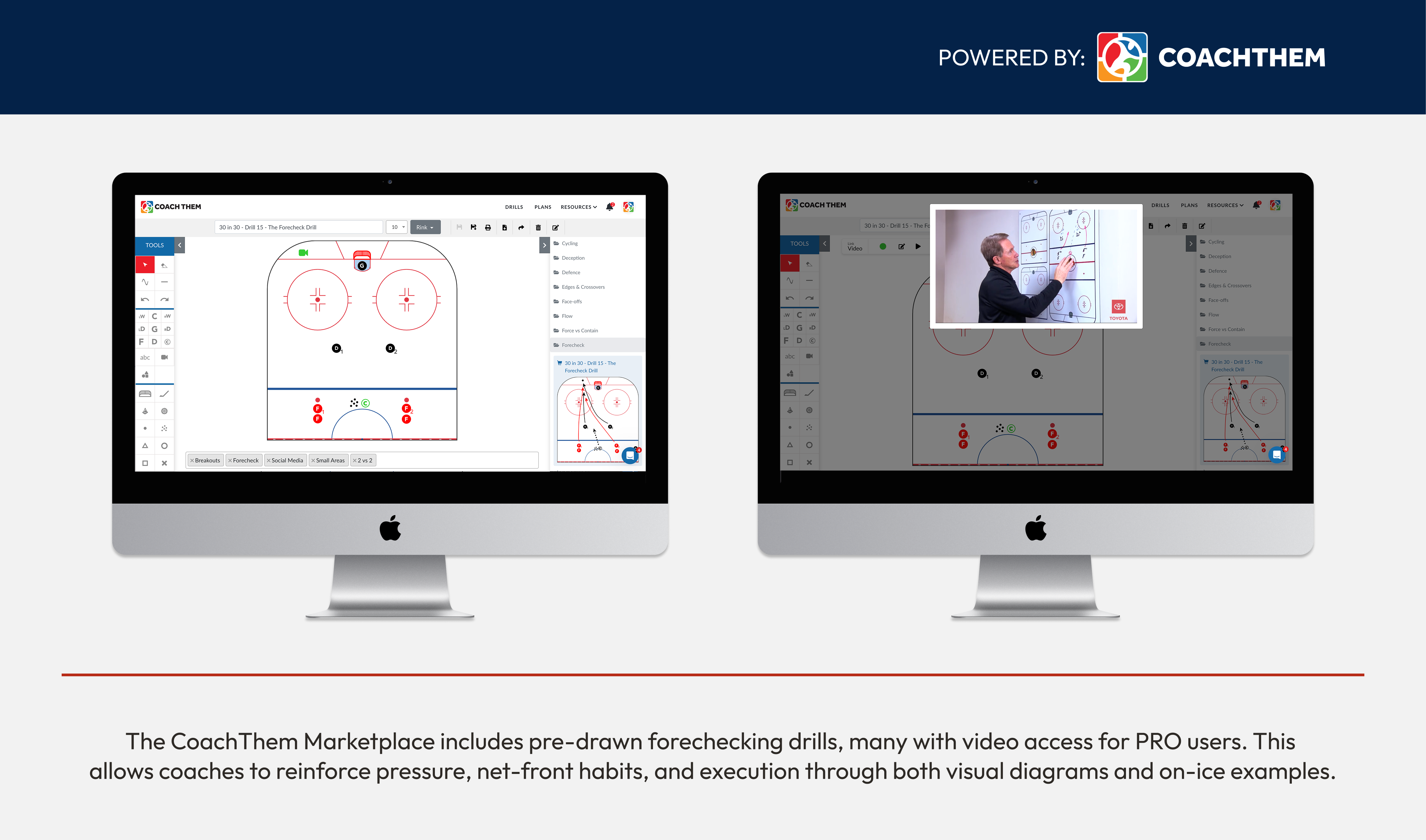
Using CoachThem, coaches can build practice segments dedicated to forecheck structure and net-front battles. These drills can be saved and reused weekly, reinforcing habits that lead to sustained offensive pressure. Coaches can also collaborate with assistants by sharing practice plans and allowing staff to add drill variations focused on competing and finishing.
Planning, Structure, and Consistency Off the Ice
Olympic success isn’t just about systems—it’s about preparation. Coaches plan practices with intention, repeat concepts, and ensure players understand expectations long before game time.
How CoachThem supports Olympic-level preparation
CoachThem allows coaches to build weekly practice plans, organize drills by category and age level, and adjust sessions without starting from scratch. By having a clear, organized view of each practice, coaches spend less time scrambling and more time teaching. Assistant coaches can contribute directly, ensuring everyone is aligned on systems, terminology, and teaching points.
Bringing Olympic Principles Into Everyday Coaching
The methods that determine Olympic success—neutral-zone discipline, structured pressure, clean transitions, and consistent preparation—are built on fundamentals that every coach can adopt. By focusing on habits, decision-making, and repetition, coaches can prepare their teams to perform when the pace increases and the stakes rise.
Using CoachThem to plan, organize, and reinforce these concepts allows coaches at any level to bring Olympic-inspired structure into their everyday training—without overcomplicating the process.

Frequently Asked Questions
Do Olympic hockey training methods only apply to elite teams?
No. While Olympic teams operate at the highest level, their training methods are built on universal principles such as structure, repetition, spacing, and decision-making. These concepts can be scaled to fit youth, amateur, and recreational teams by adjusting pace, complexity, and drill duration.
How can youth coaches teach Olympic-style systems without overwhelming players?
The key is simplicity and consistency. Olympic systems are effective because players repeatedly see the same concepts and understand their roles. Youth coaches can focus on basic positioning, clear responsibilities, and small progressions rather than trying to install complex tactics all at once.
How does CoachThem help coaches implement system-based training?
CoachThem allows coaches to organize drills by theme, build repeatable practice structures, and revisit the same systems throughout the season. This helps players recognize patterns, reinforces habits over time, and ensures practices stay focused and intentional.
Can Olympic concepts be taught without full-ice or advanced facilities?
Yes. Many Olympic principles, such as neutral-zone structure, forechecking habits, and net-front play, can be taught using small-area games and modified drills. The emphasis is on decision-making and positioning, not rink size or resources.